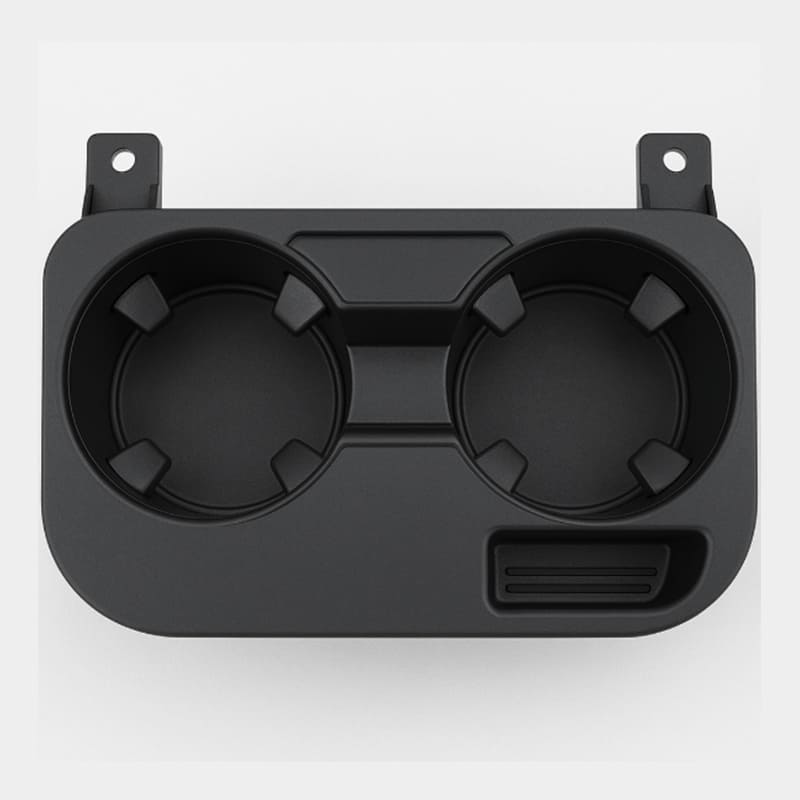
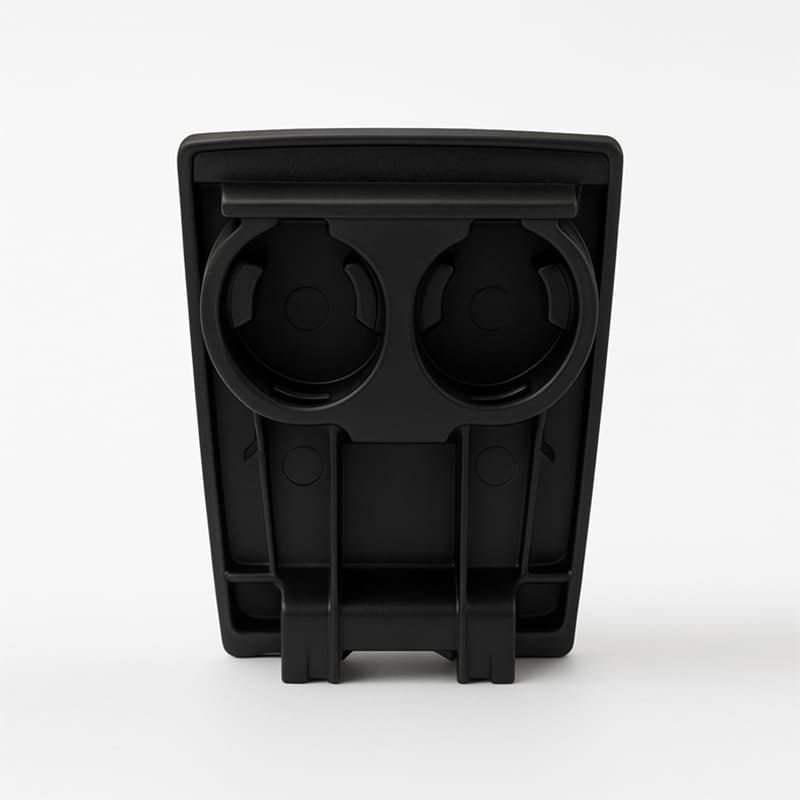
This mold has been designed exclusively for the large-scale and high-consistency production of automotive center console cup holders. Contemporary automotive cup holders are more than simple storage space—a sophisticated component constituting a smart cockpit. They must confront the fundamental challenges involving heating resistance, anti-deformation, splash-proofing, anti-corrosion, alliance with differing sizes of containing vessels, and the perfect coexistence with wireless charging pads and touch-screen periphery electronics. On the basis of our comprehension and skills acquired through our collaboration with the worldwide-renowned automotive parts vendor presently specializing inexclusively in the realm of rearview mirrors and the respective mirror suction cups via our partnership with Autozone, the exacting demands entailed by automotive interior parts for dependable precision assembling, ruggedness, and complementarities with electronics have been met throughout the entire developmental stage involved with the mold designed for making the automotive cup holder.
We identified that cup holders and precision electronic components such as reversing cameras integrated into rearview mirrors are present in the high-frequency region of the driver's field of view and that the quality of these components has a direct influence on the overall quality of the vehicle. Therefore, the goal of the engineering design is to apply the principle of compatibility by optimizing the components for possible interference of the high-frequency region and ensuring that the components retain their dimensions. This is in line with the principle of electromagnetic-design for the supply of components for the digital rearview mirrors for high-end vehicles.
The cup holder must work properly in temperatures ranging from -40°C to 120°C and is required to handle different kinds of liquids like coffee and carbonated drinks. We incorporate heat-resistant ABS and adopt a focused rubber layer design on the elastic claws and anti-slip pads that are in direct contact with the body of the cup. This design has a multi-slider and lift mechanism in the mold. This combines complex moving parts into a single molding cycle that allows the opening and closing process with a service life of over 20,000 times.
In consideration of the interior premium environment, the visible part of the cup holder requires an A-grade surface or texture. The mold cavity is S136 or NAK80 mirror steel, processed to Ra≤0.05μm with diamond polishing paste, or a uniform matte texture through precision etching. In addition, we can adopt the technology of in-mold transfer and apply an anti-fingerprint treatment.
For rapid response to the demands of varied car models and the aftermarket, we designed a modular mold system. The central part of the base mold is fixed, while the diameter, height, and form of the cup holder cup can be varied by substituting the inserts. Thus, we can efficiently supply the aftermarket, such as car part suppliers, and the front-end projects concerning adaptation to varied models, with and without the cooling function.
Our validation procedures include more than conventional interior parts, borrowing standards from the field of precise electronic components.
Each and every design for a cup holder goes through rigorous "Design Validation" testing, which includes the following: load and insert/eject life testing, fluid and detergent corrosion resistance testing, dimensional and functional verification at temp cycle extremes, and long-term vibration simulation.
Every component will also undergo evaluations using vehicle environment simulation testing tools to ensure that all clearances to center console components are no more than 0.5mm, as well as ensuring that steps are at acceptable levels. Surfaces will also be thoroughly tested for scratch resistance with steel wool, as well as touch and vision checks.
All materials are compatible with automobile interior VOCs and smell requirements. The production process adopts the IATF 16949 management system. It ensures that there is traceability throughout the production process.
JinYi Mould offers ODM/OEM services, including industrial design, structural design, mold making, injection molding, and module assembly. Our production line is equipped with robots and vision inspection systems. This enables 100% online quality inspections. From matching parts for front-end vehicles to integrated rear-view mirror suction cup assembly solutions for suppliers, we provide flexible and effective manufacturing solutions.
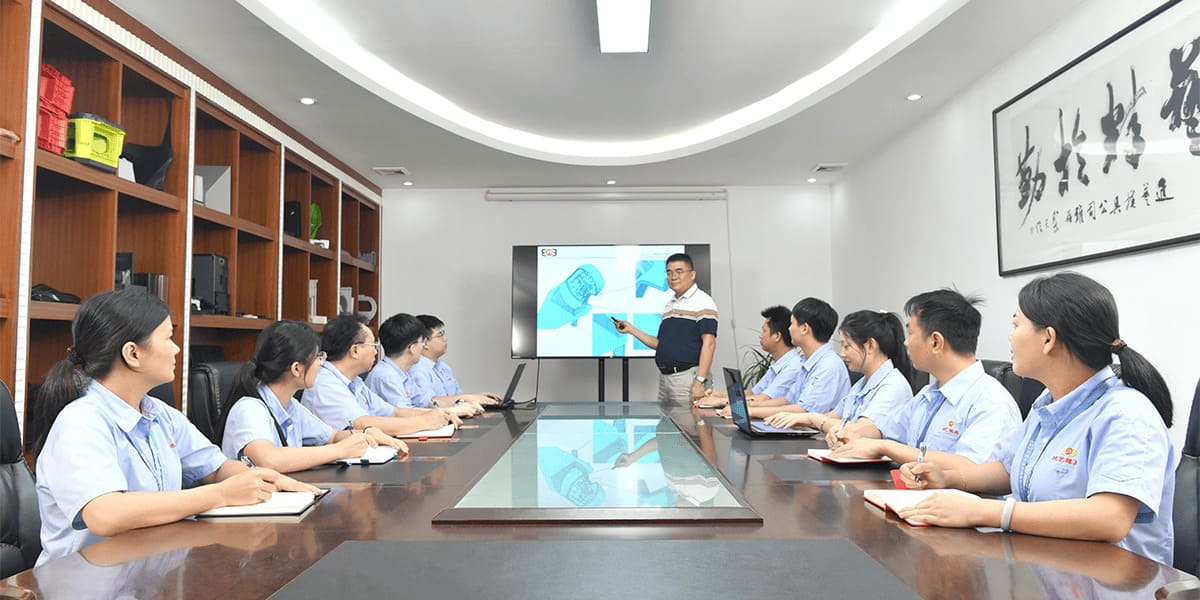
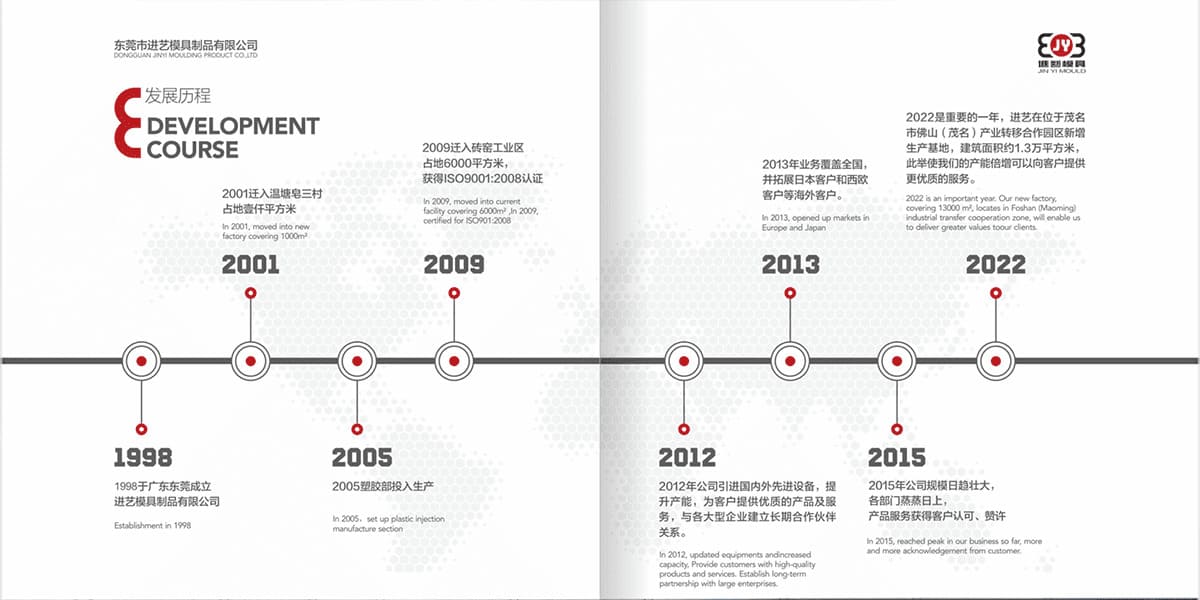
Jinyi Mold was established in 1998 and is headquartered in Dongguan, Guangdong. Our professional team provides injection mold and die-casting mold services, providing you support in every aspect from design, manufacturing to final assembly.
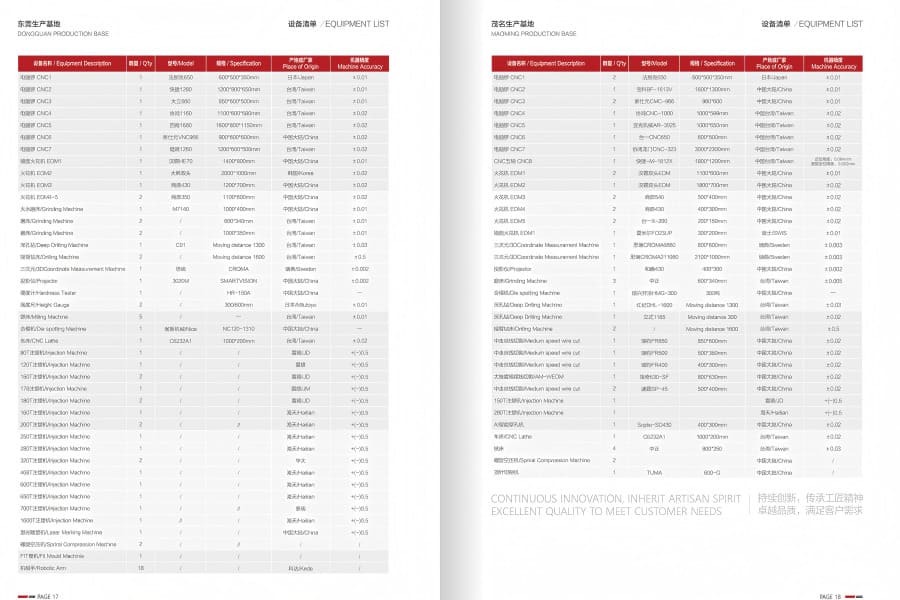
dozens of CNC machining centers (gantry & 5-axis), injection molding machines (80-1600 tons), EDM machines, automation equipment, etc.
Establish solid partnerships with Europe, Australia and Asia to carry out international export business.
Company production capacity: A 13,000㎡ production base in Maoming (built in 2022), backing an annual turnover surpassing 150 million RMB.
Possess High-Tech Enterprise Certification, ISO9001:2015 Quality management system certification.
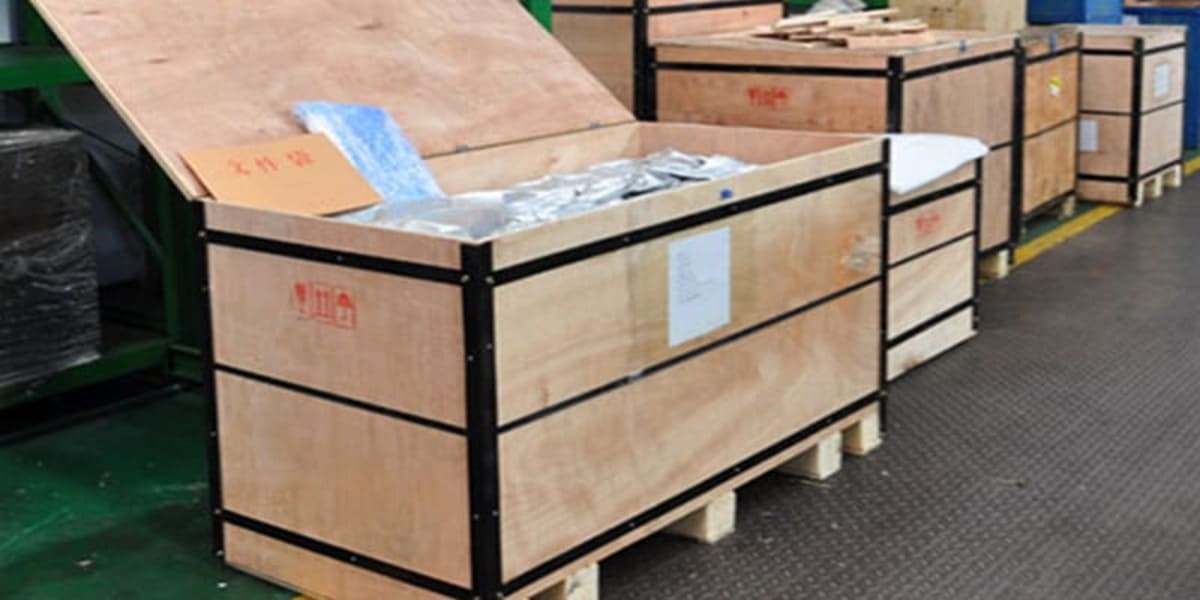
Logistics follows international transportation standards, and packaging is packed in reinforced wooden boxes, filled with PE foam and wrapped in moisture-proof bags.
Marketing: Selina Chan
WhatsApp:+8618969686504
Email:selina@jy-mould.com
Contact us to discuss how we can support your project needs
Please know that when you choose Jinyi Mold, we are not only a supplier, but also a Chinese manufacturing partner with 25 years of experience in mold design, manufacturing, and assembly.
We specialize in providing high-precision mold manufacturing and injection molding solutions for industries including automotive, home appliances, consumer electronics, medical devices, and industrial equipment.
Quality is controlled through a comprehensive system, including mold flow analysis, strict material certification, in-process inspections, and final product testing. We also provide complete documentation such as steel certificates, hardness reports, and dimensional inspection reports.
For mold making, the lead time is typically 4–6 weeks after design approval. For mass production of plastic parts, it usually takes 2–3 weeks depending on part complexity and order quantity.
Yes, our engineering team provides full support from DFM (Design for Manufacturability) analysis to mold design optimization, helping customers accelerate product development and reduce production risks.
Our standard terms are 50% deposit upon order confirmation and 50% balance payment before shipment. Flexible payment arrangements can be discussed based on project scope and cooperation level.
Absolutely. In addition to mass production, we offer low-volume manufacturing, rapid prototyping via 3D printing and silicone molding, ensuring customers can quickly validate designs before full-scale production.
We accept a wide range of file formats including STEP, IGES, DWG, and PDF for mold design, DFM analysis, and quotation preparation.
Yes, we provide mold maintenance instructions with each shipment. If any issues occur, our technical team offers remote support or on-site service depending on the situation.
Yes, we have extensive experience in multi-cavity, family molds, and complex molds that require interchangeable inserts, ensuring cost-effective and efficient production for customers.
We are familiar with a wide range of thermoplastics including ABS, PC, PA, POM, PP, TPE, TPU, and high-performance engineering plastics based on customer requirements.
Yes. We are experienced in manufacturing molds compliant with international standards such as HASCO, DME, and MISUMI, ensuring smooth integration with overseas production lines.
We take IP protection seriously. We are willing to sign NDAs (Non-Disclosure Agreements) and have strict internal controls to ensure all customer designs and projects remain confidential.