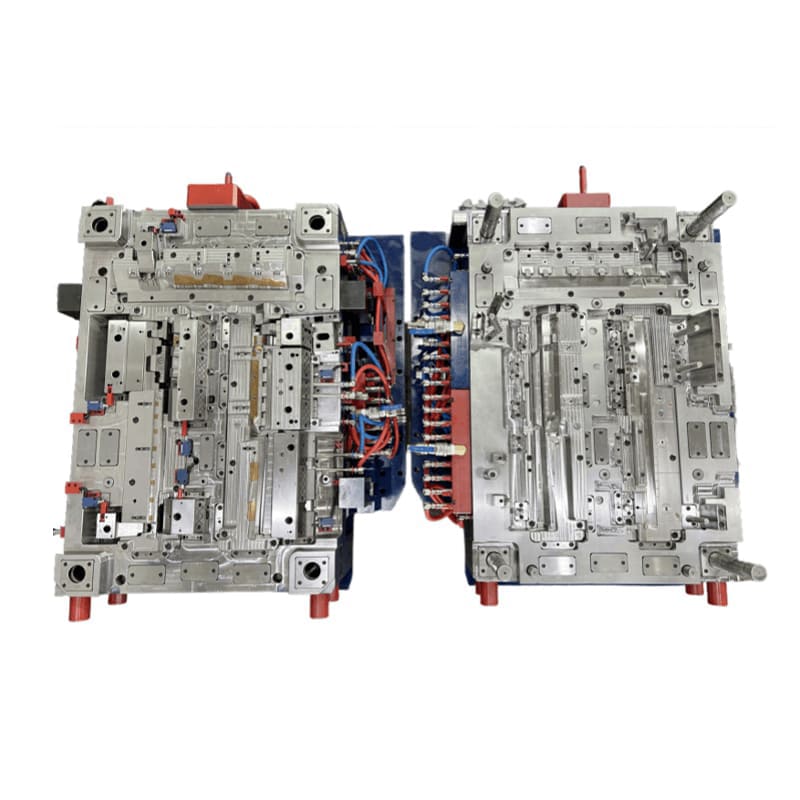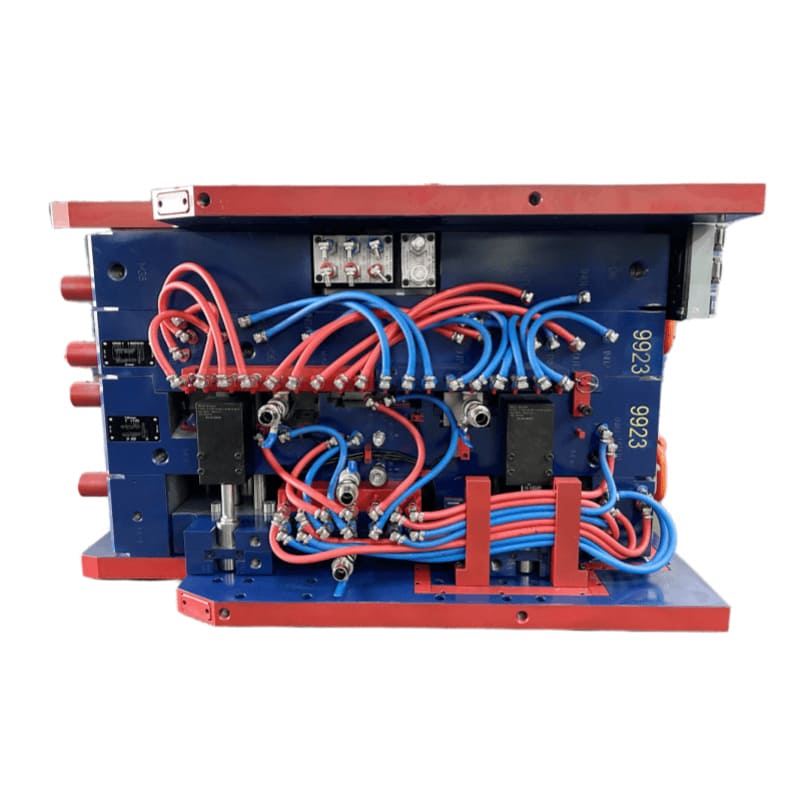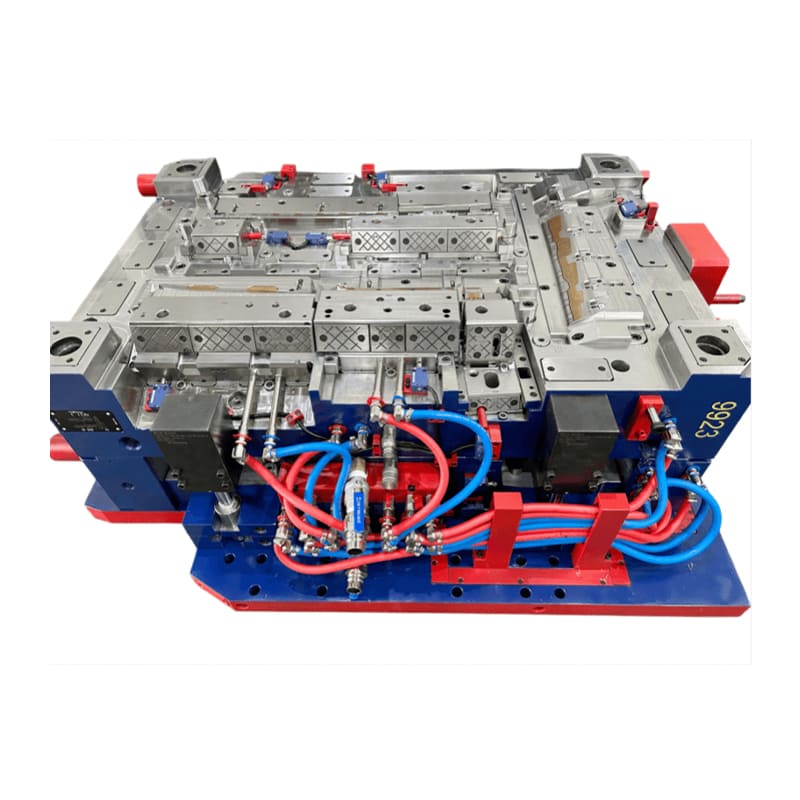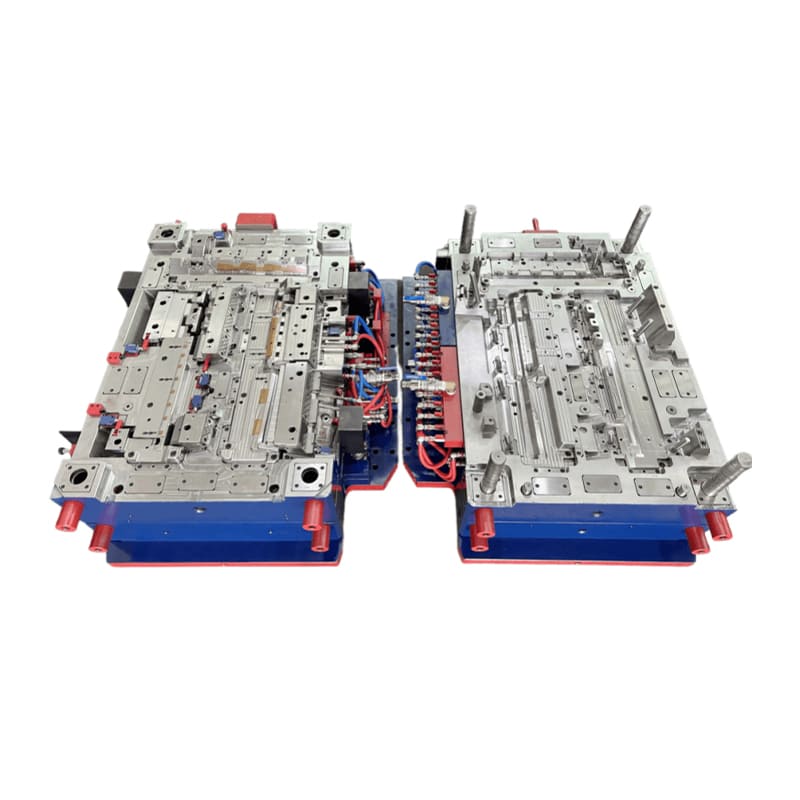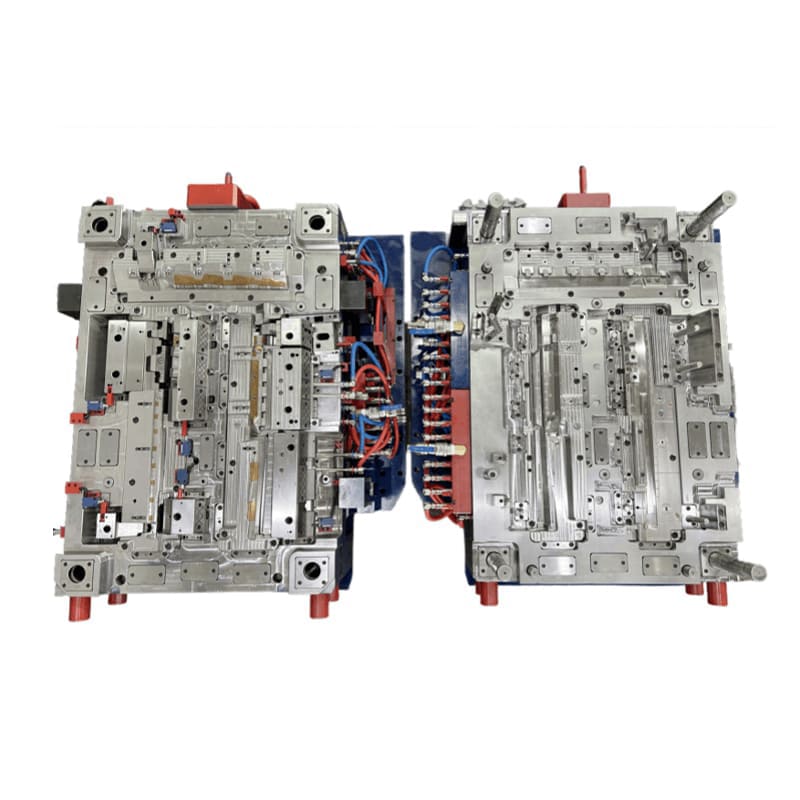
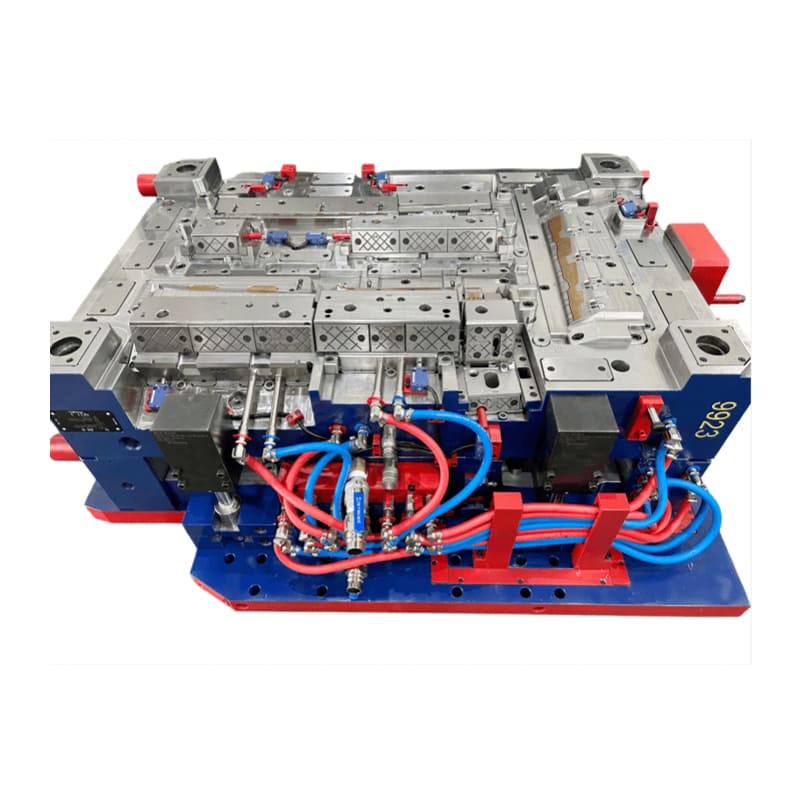
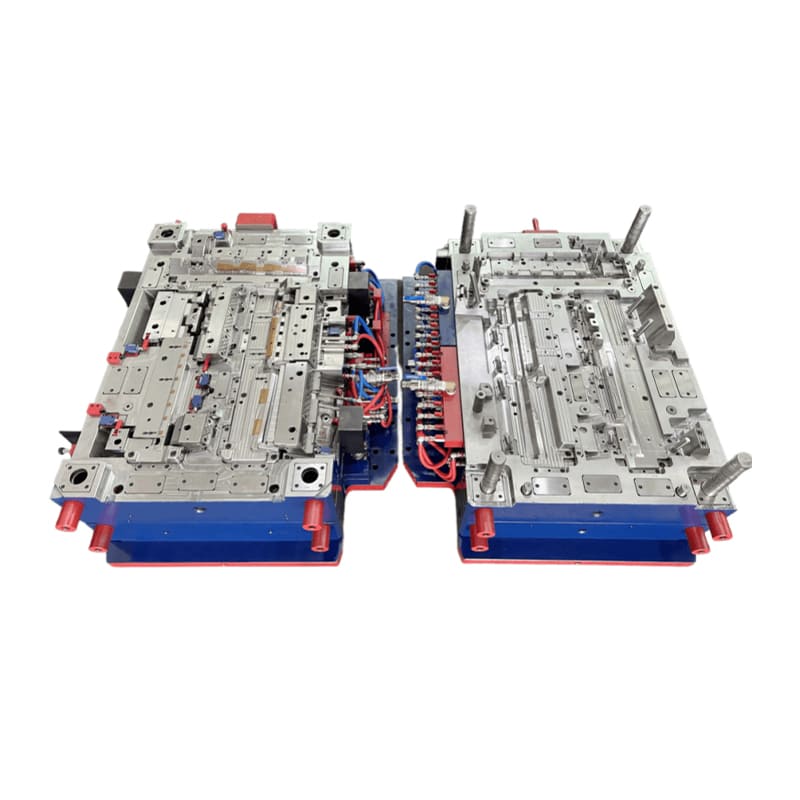
It was developed for a European first-tier supplier and is applied to the production of PP-GF20 glass fiber reinforced support frames for automobile dashboards that are 1150mm wide. The aim of this core type is to provide solutions to warpage and size stability, which are inevitably encountered through injection molding of structural products of this size and complexity.
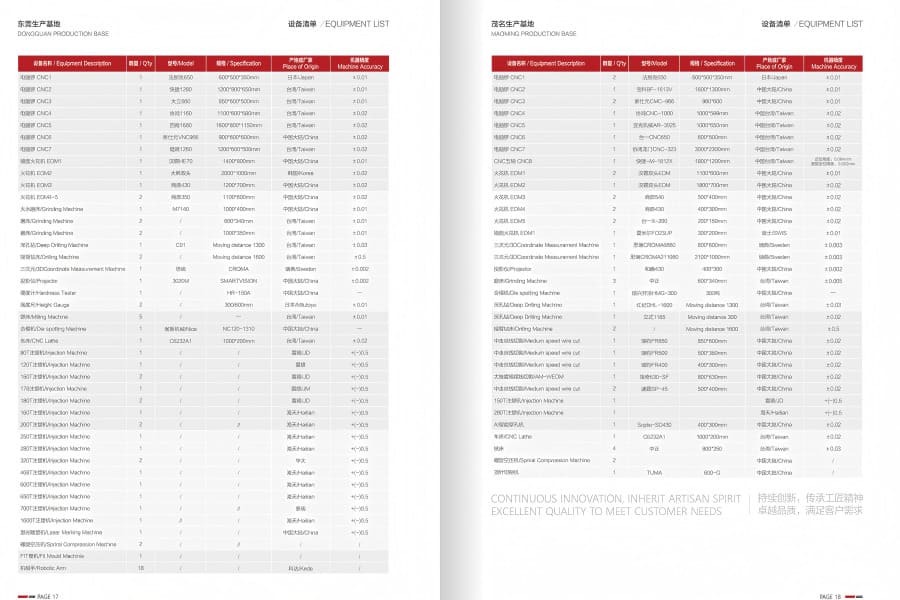
Leveraging on the use of an engineering team comprising over 500 engineers and the ISO 9001 system, we offer system solutions from simulation and manufacturing, including design pre-compensation based on advanced CAE mold flow and stress analysis; precision processing based on high-precision CNC and EDM machines; and verification and mass production based on 18 injection-molding machines (80-1600 tons).
Simulation and processing
Employ CAE analysis in predicting fiber orientation and shrinkage stress in designing molds. High-precision CNC machining as well as EDM ensure perfection in processing complex parts with compensation structures.
Runner and cooling:
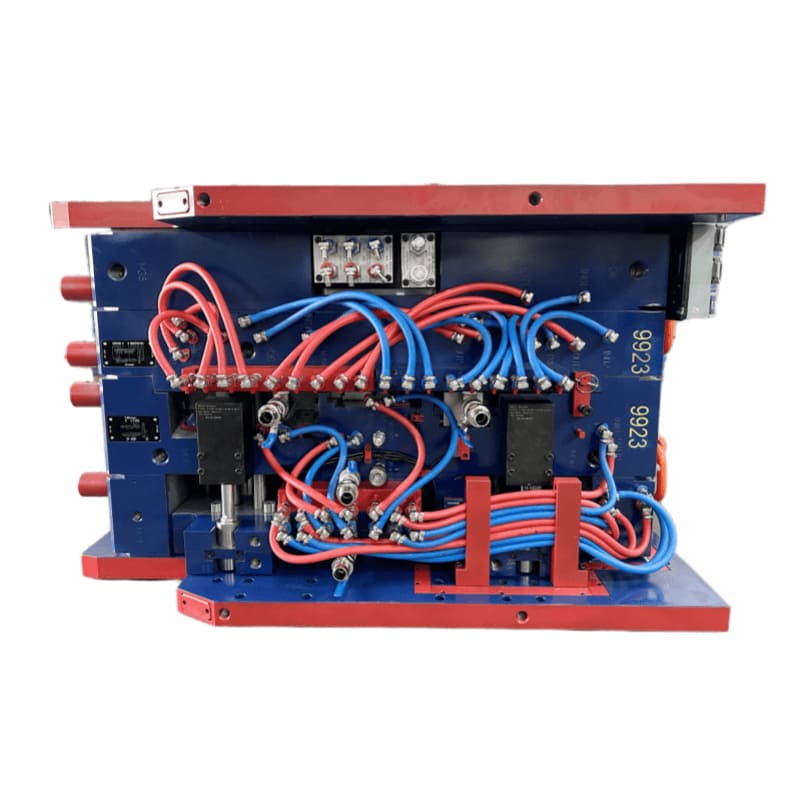
Multi-point needle valve hot runners are adopted for balanced filling. Conformal cooling water channels have high density and are arranged in the core region for differential control of the temperature difference between thick ribs and thin-walled sections for balanced shrinkage from the source.
Realization of complex structure
The 6 sets of lateral core-pulling mechanisms, comprising hydraulic sliders, should be incorporated to effectively handle complex undercut features.
Validation and Quality Assurance
Quality control is done according to the standard “T/ACCEM 572-2025 Acceptance Specifications for Automotive Injection Molds.” This involves
Multiple rounds of mold testing:
By the iteration of T0 through Tn mold testing, the process window is locked, and the target mass production cycle time is 55 seconds.
Dimensional Inspection:
Samples at each step are scanned in their entirety by a three-dimensional coordinate measuring machine (CMM) to guarantee that the tolerance of the critical positions of the installations is controlled to within ±0.1mm.
Actual assembly test:
The last sample is implemented and verified on the customer's inspection tool or similar parts to ensure that all functional interfaces conform to standards.
Service & support
With the use of special wear-resistant steel materials, the mold design life target can reach 800,000 mold cycles with standardized maintenance. For the mold delivery, the locked process parameters ensure that the customer can mass produce with stability through the use of the design drawings that come with the mold.
As this case illustrates, JinYi Mold has the technical expertise to respond to the “high rigidity, low warpage” requirements when molding the structural car parts. If you also have structural car parts to mold with the aforementioned characteristics, please send the components’ data, and we will give you the solution.
About Us
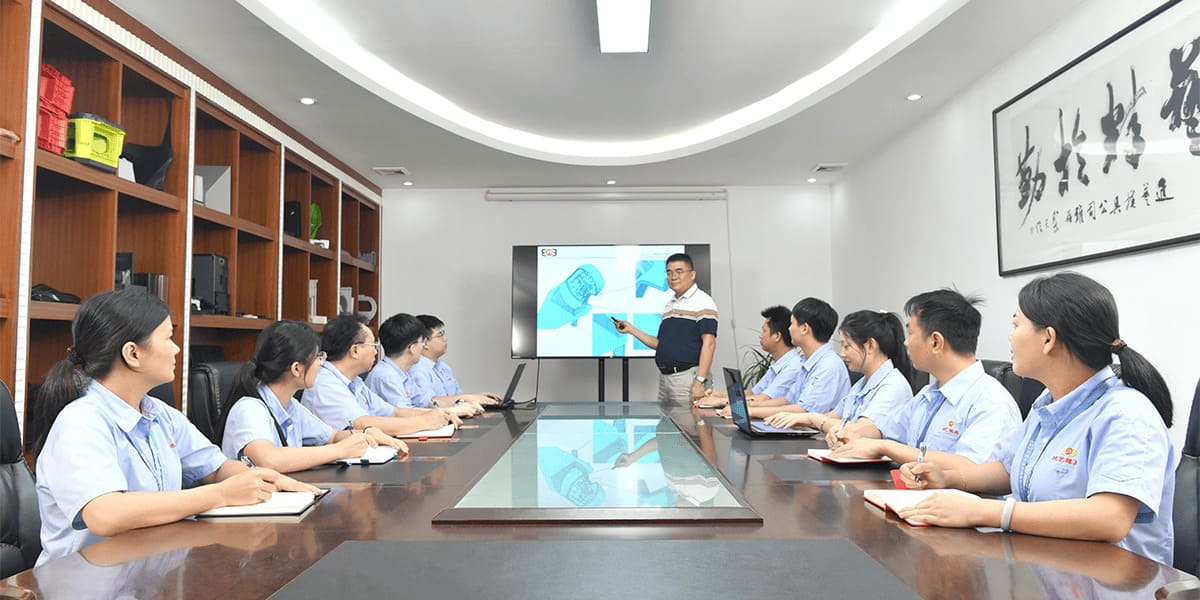
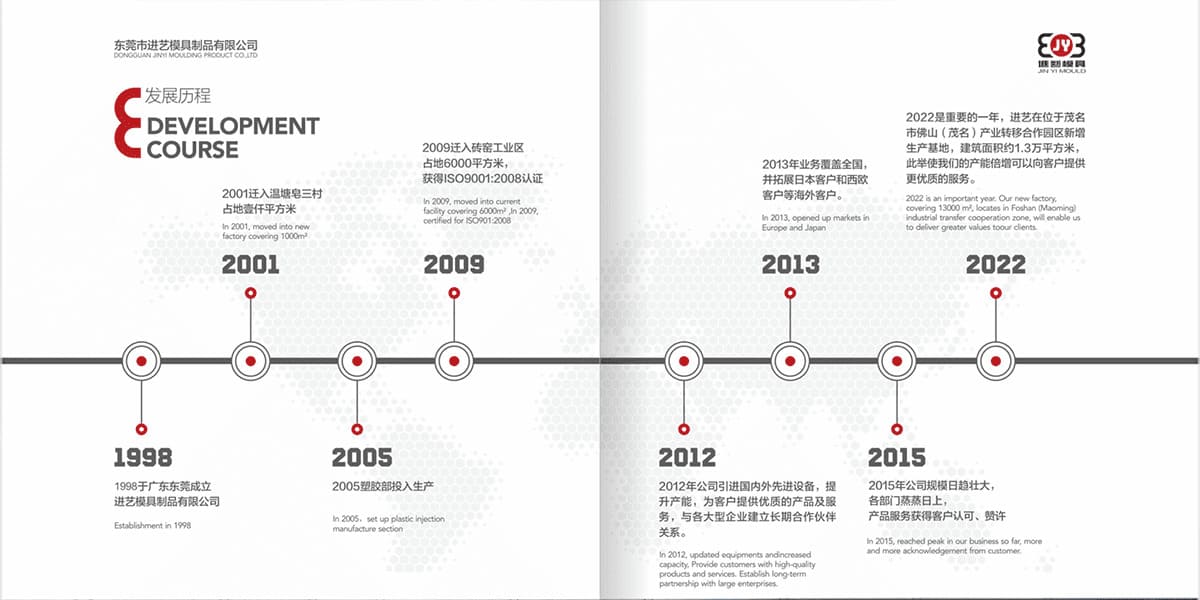
Jinyi Mold was established in 1998 and is headquartered in Dongguan, Guangdong. Our professional team provides injection mold and die-casting mold services, providing you support in every aspect from design, manufacturing to final assembly.
Production equipment:
dozens of CNC machining centers (gantry & 5-axis), injection molding machines (80-1600 tons), EDM machines, automation equipment, etc.
Scope of services:
Establish solid partnerships with Europe, Australia and Asia to carry out international export business.
Company production capacity: A 13,000㎡ production base in Maoming (built in 2022), backing an annual turnover surpassing 150 million RMB.
Honors and qualifications:
Possess High-Tech Enterprise Certification, ISO9001:2015 Quality management system certification.
Logistics and freight:
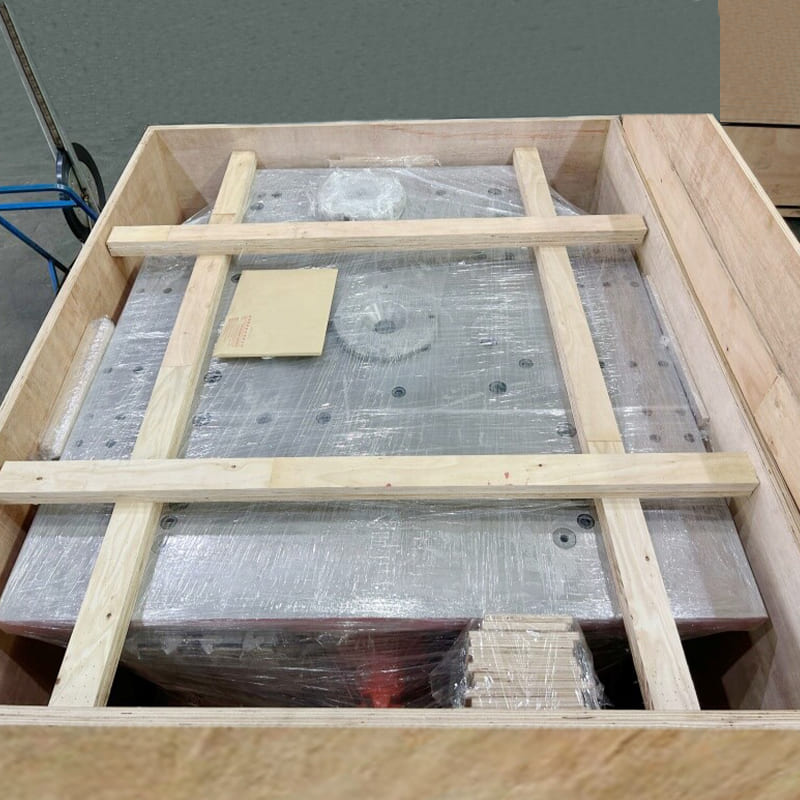
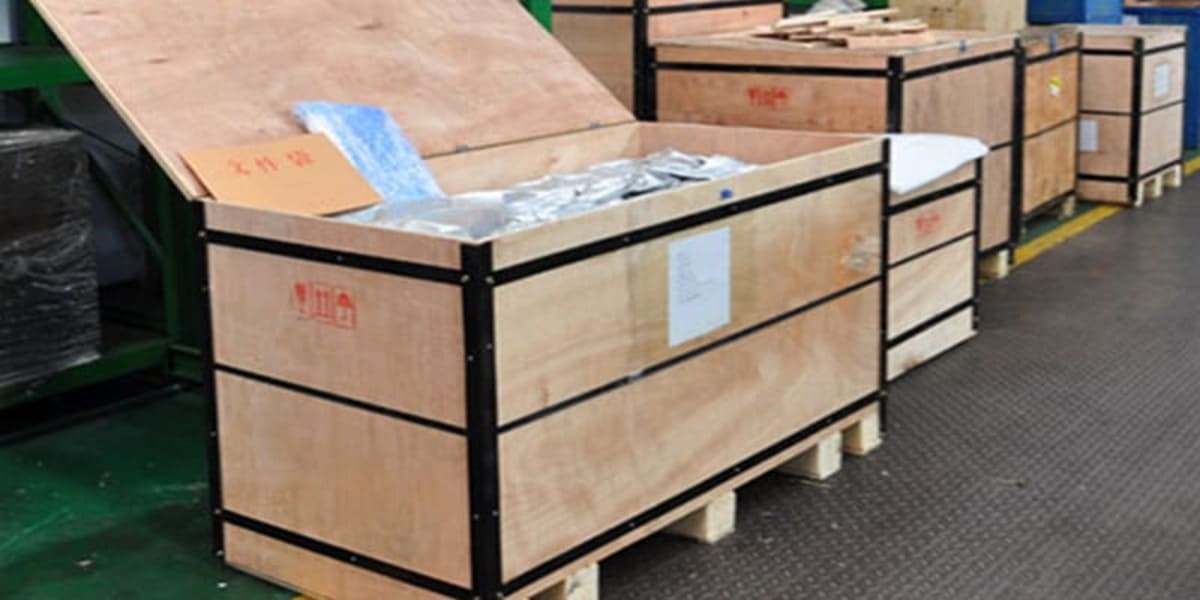
Logistics follows international transportation standards, and packaging is packed in reinforced wooden boxes, filled with PE foam and wrapped in moisture-proof bags.
Marketing: Selina Chan
WhatsApp:+8618969686504
Email:selina@jy-mould.com
Contact us to discuss how we can support your project needs
Please know that when you choose Jinyi Mold, we are not only a supplier, but also a Chinese manufacturing partner with 25 years of experience in mold design, manufacturing, and assembly.