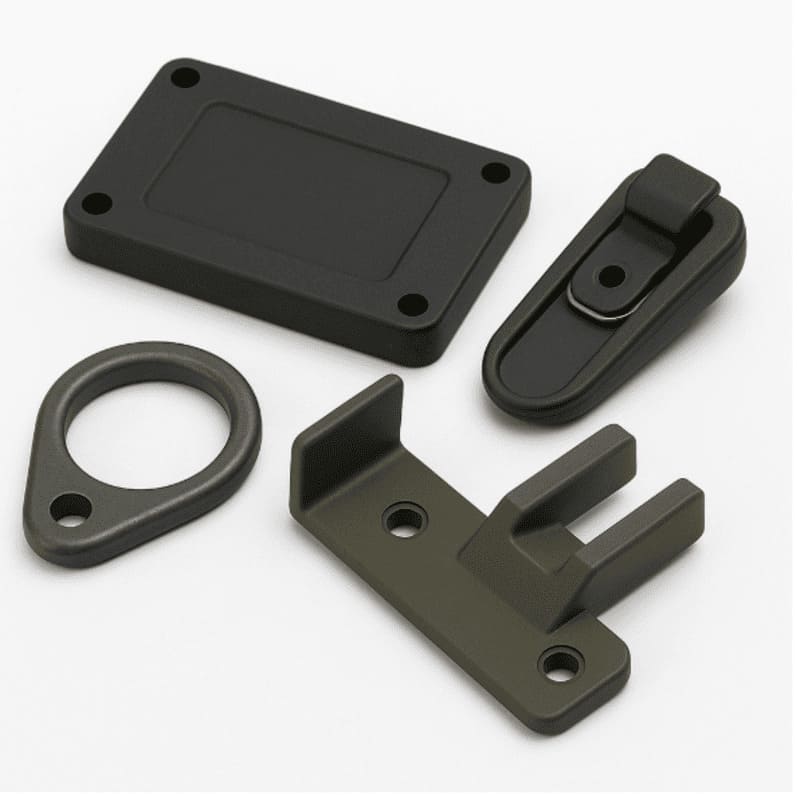
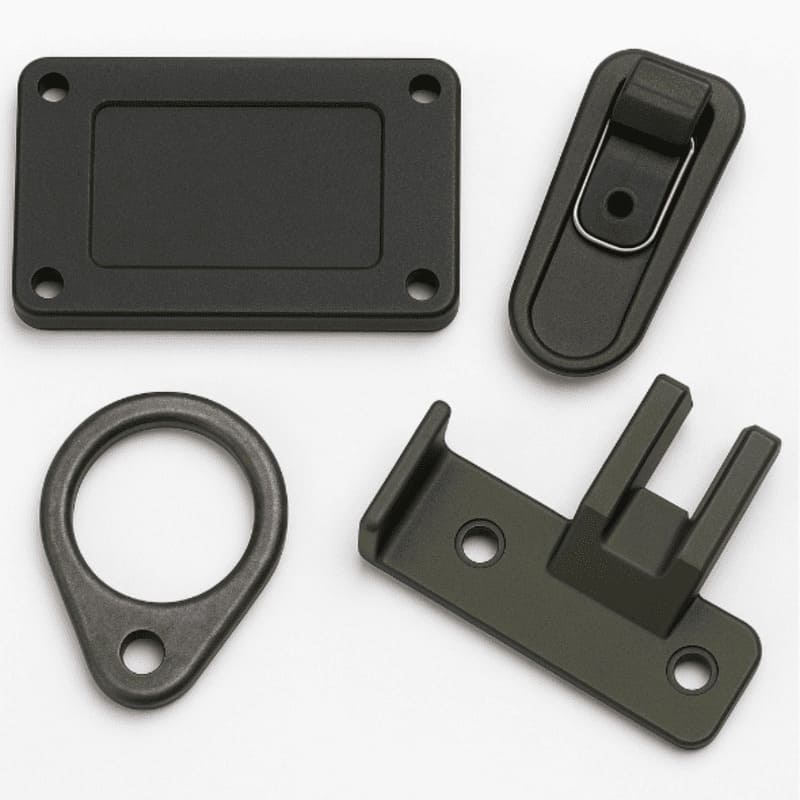
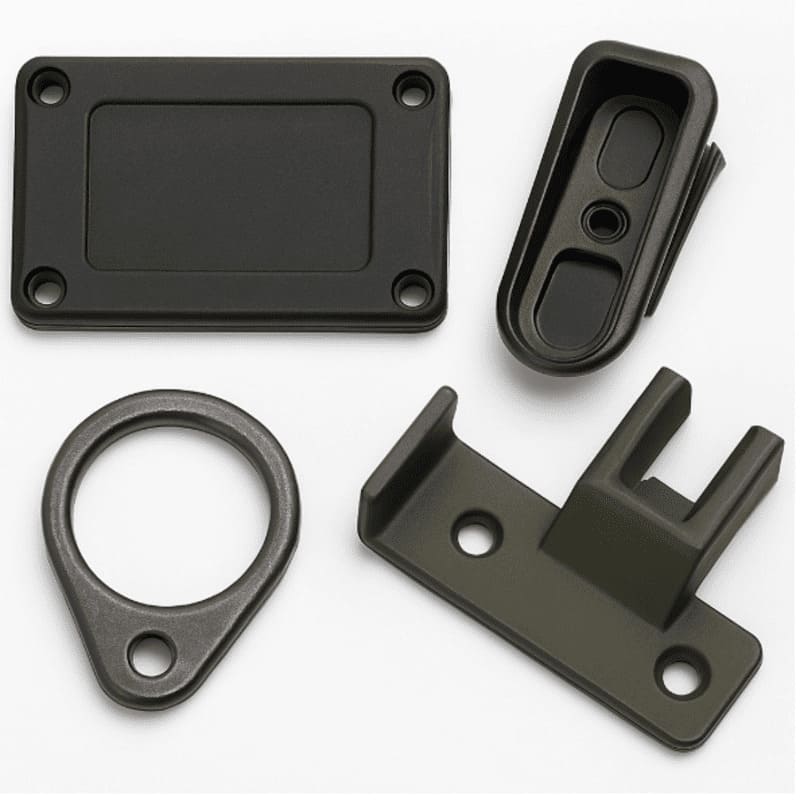
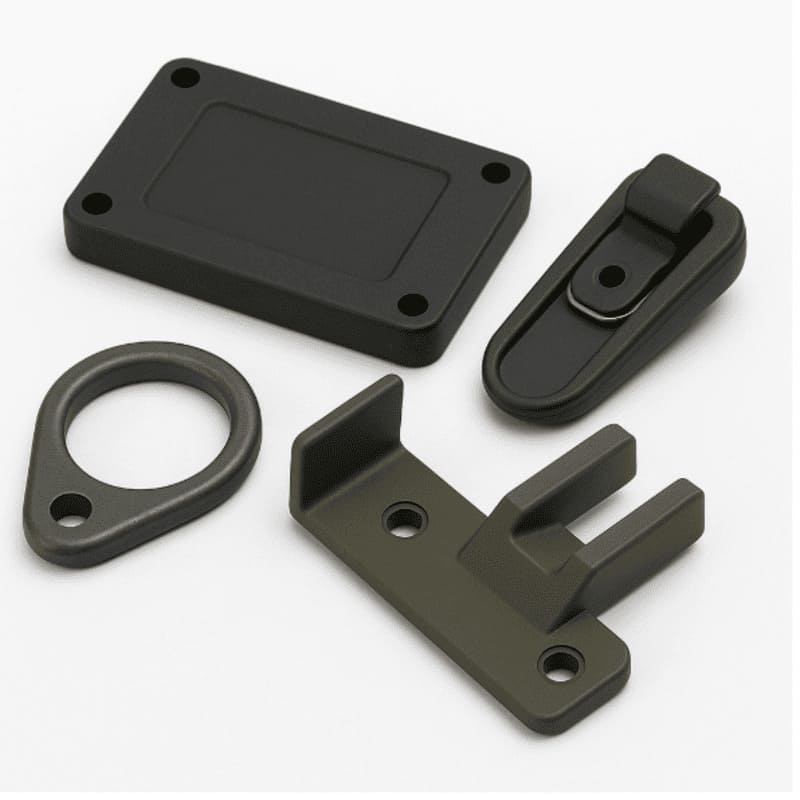
This product line provides engineering development and manufacturing services for plastic and metal integrated components for military equipment. The core is to solve system-level challenges such as structural connection, thermal expansion matching, electromagnetic compatibility (EMI) and lightweight integration between heterogeneous materials (such as engineering plastics and aluminum alloy/stainless steel). Such components are commonly found in modular communication terminals, individual soldier system carrying frames, quick disassembly interfaces and equipment-level impact-resistant structures. Through the "Design for Manufacturing and Assembly (DFMA)" process, we integrate injection molding, die casting, CNC machining and joining processes up front, aiming to deliver highly integrated subsystems that can be directly assembled, rather than just discrete parts.
Our engineering practices incorporate experience in serving clients with high international standards. In the process of participating in projects that comply with the harsh environmental regulations of Israeli defense forces equipment and providing key structural components for the American security products market, the full-process traceable quality control system and rapid prototyping response capabilities established by JinYi Mold form a solid foundation for serving global Military-grade equipment projects.
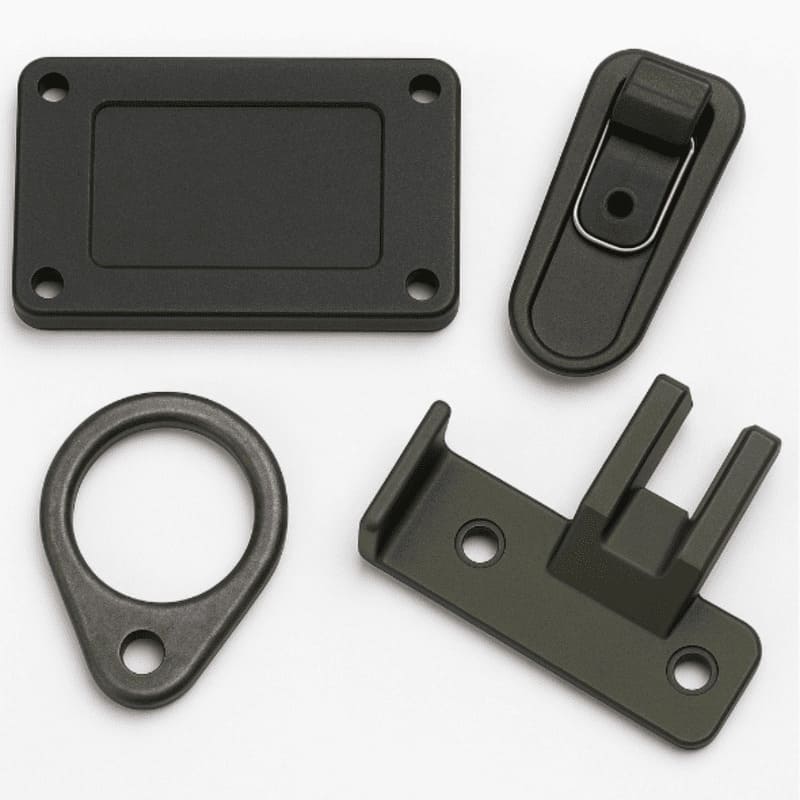
Mainly made of glass fiber reinforced high-temperature nylon (such as PA66-GF35, heat distortion temperature HDT @1.8MPa >250°C), polyetherimide (PEI/Ultem) and polyetheretherketone (PEEK) to meet the requirements of structural strength, weather resistance and low outgassing.
Use 6061-T6 or 7075-T6 aluminum alloy (CNC machining), magnesium alloy (die-casting) or 17-4PH stainless steel for critical connection points that require high specific strength, fatigue resistance or electromagnetic shielding.
Use topology optimization technology to embed metal inserts in the plastic body, or design various connection interfaces such as buckles, ultrasonic welding, and structural bonding to ensure the reliability of heterogeneous material interfaces under vibration and impact loads.
Plastic molds are made of S136, H13 (hardness HRC 48-52) steel, and have special flow channels and ejection designs for insert molding (Insert Molding) or in-mold assembly. The metal die-casting mold is made of high-quality H13 steel and nitrided to extend its life.
Equipped with a five-axis linkage CNC machining center, it can perform finishing processing on plastic-metal composite parts under one-time clamping, ensuring that the position accuracy across the material reference plane is ≤0.05mm. Provides military-standard surface treatments such as micro-arc oxidation (applicable to magnesium-aluminum alloys), electroless nickel plating, Dacromet coating, etc.
The production line integrates in-mold sensing and visual inspection systems to monitor the cavity pressure curve of plastic injection molding and the tool wear status of metal CNC machining in real time to achieve predictive maintenance.
Plastic pellet batches, metal billet sources, process parameters and quality data are bound and traced through the Manufacturing Execution System (MES).
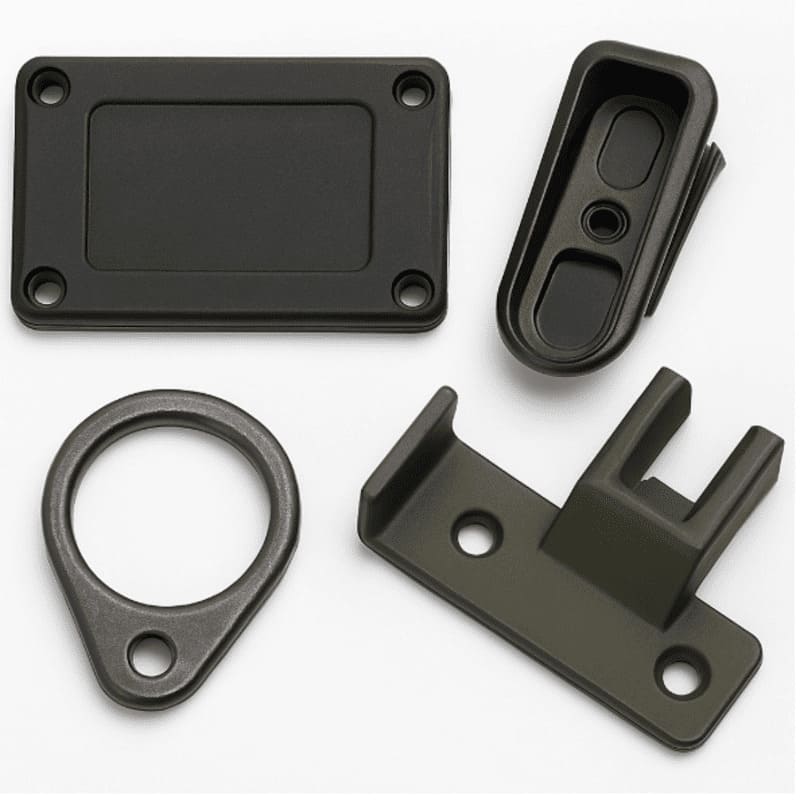
Our verification system is based on standards such as MIL-STD-810 (environmental engineering considerations) and MIL-STD-461 (electromagnetic compatibility), and is tailored and deepened according to specific project requirements.
Focus on vibration (three-axis random vibration), mechanical shock (half sine wave, peak acceleration up to 50G), high and low temperature cycles (-54°C to 85°C) and salt spray corrosion combined tests to assess the long-term integrity of the connection interface of heterogeneous materials.
For components containing circuits or signals, conduct EMI shielding effectiveness (≥30dB attenuation) testing and waterproof and dustproof (IP67 level) verification. All connection interfaces must pass a plug-in, pull-out or disassembly life test of ≥500 times.
In the Designing Military Grade Product stage, finite element analysis (FEA) is used to conduct multi-physics (structural, thermal, electromagnetic) coupling simulation to reduce physical iteration risks with virtual testing.
JinYi Mold supports the entire process from "rapid functional prototyping (using 3D printing and rapid CNC)" to "small and medium-sized batch flexible production". Drawing on our experience in developing products for brands that have extreme requirements for durability, such as tuffy security products, we can quickly adapt and meet the specific design needs of various military-grade equipment in terms of field maintainability and modular upgrades.
If your equipment project involves a complex plastic-metal integrated structure and requires a solution that combines lightweight, high reliability and rapid deployment capabilities, we can provide professional support from conceptual design, engineering simulation to manufacturing integration. Please provide initial requirements and performance specifications and we will initiate a technical feasibility analysis.
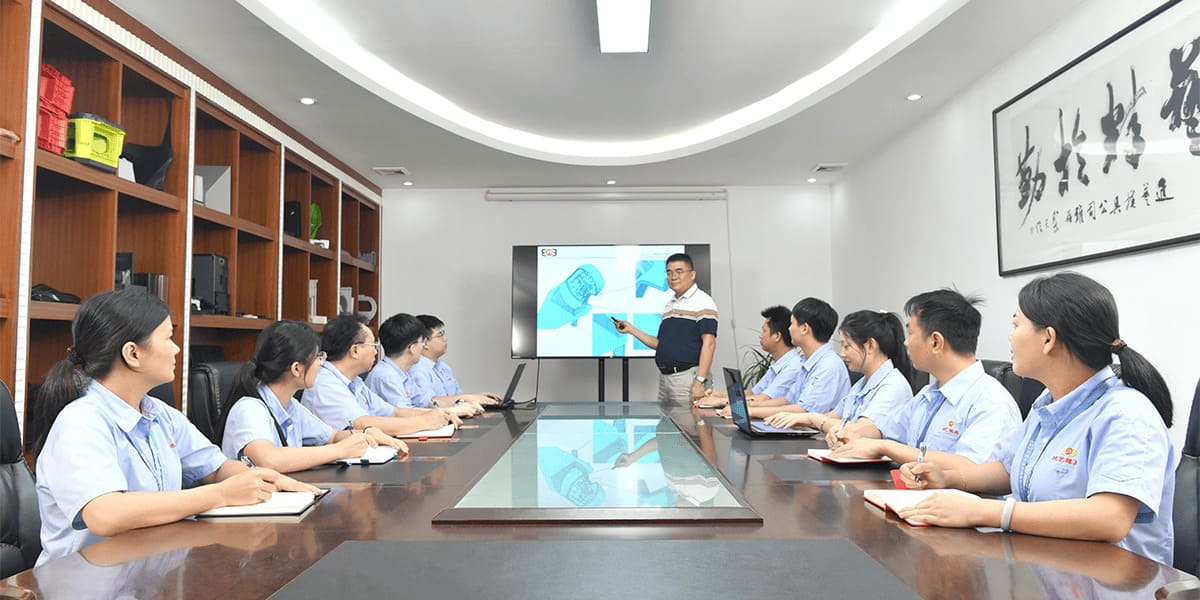
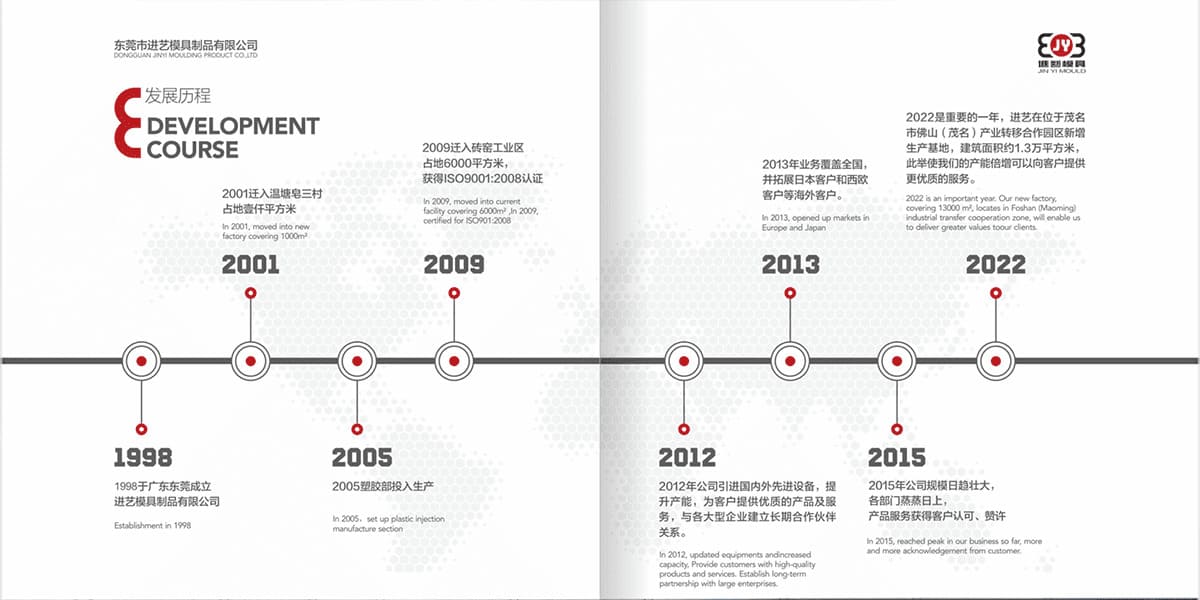
Jinyi Mold was established in 1998 and is headquartered in Dongguan, Guangdong. Our professional team provides injection mold and die-casting mold services, providing you support in every aspect from design, manufacturing to final assembly.
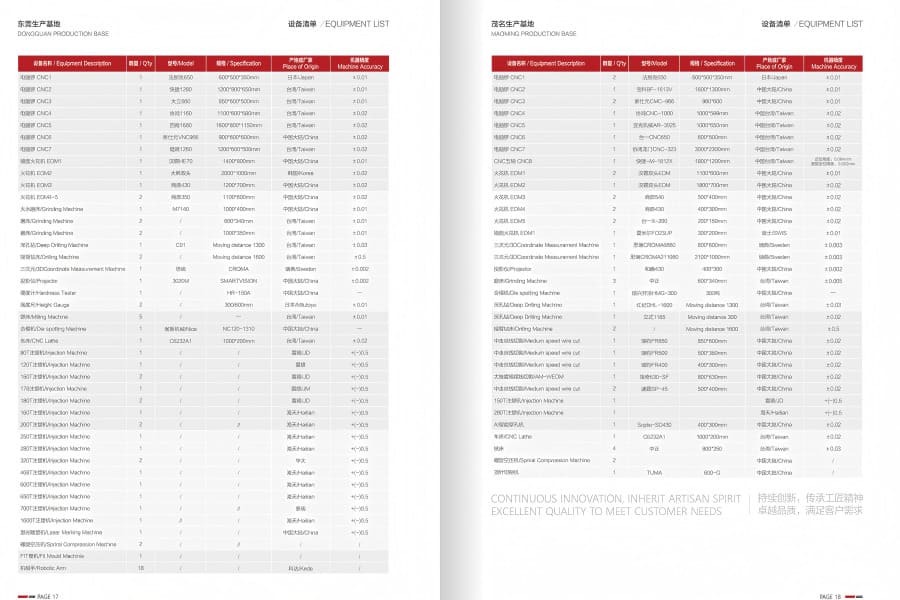
dozens of CNC machining centers (gantry & 5-axis), injection molding machines (80-1600 tons), EDM machines, automation equipment, etc.
Establish solid partnerships with Europe, Australia and Asia to carry out international export business.
Company production capacity: A 13,000㎡ production base in Maoming (built in 2022), backing an annual turnover surpassing 150 million RMB.
Possess High-Tech Enterprise Certification, ISO9001:2015 Quality management system certification.
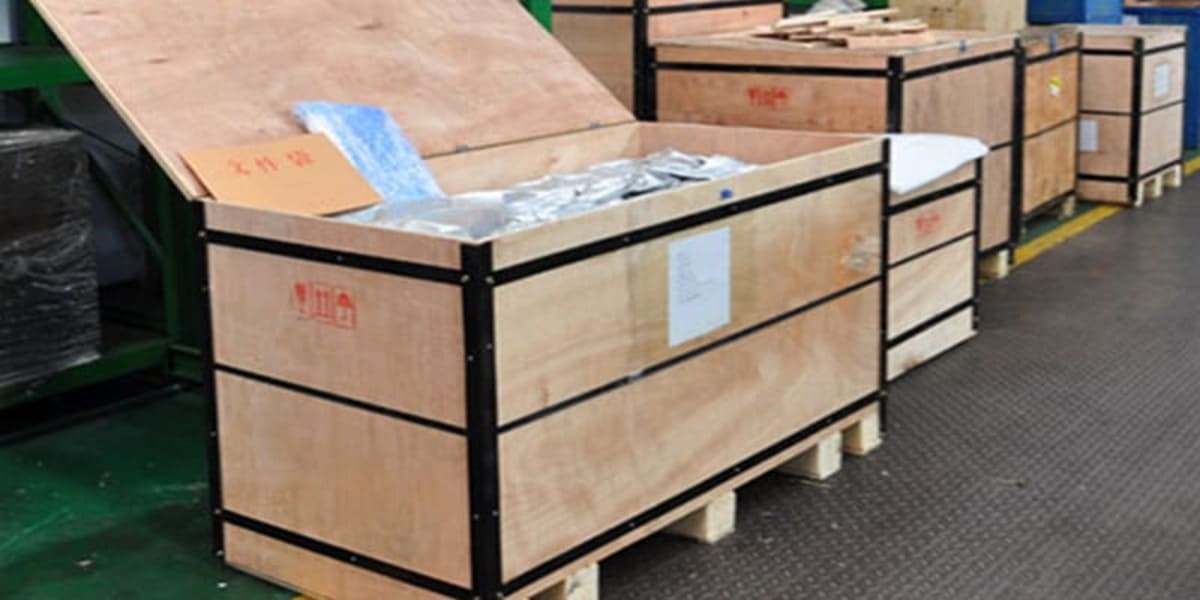
Logistics follows international transportation standards, and packaging is packed in reinforced wooden boxes, filled with PE foam and wrapped in moisture-proof bags.
Marketing: Selina Chan
WhatsApp:+8618969686504
Email:selina@jy-mould.com
Contact us to discuss how we can support your project needs
Please know that when you choose Jinyi Mold, we are not only a supplier, but also a Chinese manufacturing partner with 25 years of experience in mold design, manufacturing, and assembly.
We specialize in providing high-precision mold manufacturing and injection molding solutions for industries including automotive, home appliances, consumer electronics, medical devices, and industrial equipment.
Quality is controlled through a comprehensive system, including mold flow analysis, strict material certification, in-process inspections, and final product testing. We also provide complete documentation such as steel certificates, hardness reports, and dimensional inspection reports.
For mold making, the lead time is typically 4–6 weeks after design approval. For mass production of plastic parts, it usually takes 2–3 weeks depending on part complexity and order quantity.
Yes, our engineering team provides full support from DFM (Design for Manufacturability) analysis to mold design optimization, helping customers accelerate product development and reduce production risks.
Our standard terms are 50% deposit upon order confirmation and 50% balance payment before shipment. Flexible payment arrangements can be discussed based on project scope and cooperation level.
Absolutely. In addition to mass production, we offer low-volume manufacturing, rapid prototyping via 3D printing and silicone molding, ensuring customers can quickly validate designs before full-scale production.
We accept a wide range of file formats including STEP, IGES, DWG, and PDF for mold design, DFM analysis, and quotation preparation.
Yes, we provide mold maintenance instructions with each shipment. If any issues occur, our technical team offers remote support or on-site service depending on the situation.
Yes, we have extensive experience in multi-cavity, family molds, and complex molds that require interchangeable inserts, ensuring cost-effective and efficient production for customers.
We are familiar with a wide range of thermoplastics including ABS, PC, PA, POM, PP, TPE, TPU, and high-performance engineering plastics based on customer requirements.
Yes. We are experienced in manufacturing molds compliant with international standards such as HASCO, DME, and MISUMI, ensuring smooth integration with overseas production lines.
We take IP protection seriously. We are willing to sign NDAs (Non-Disclosure Agreements) and have strict internal controls to ensure all customer designs and projects remain confidential.