

Injection Mold Design Guide for Plastic Parts
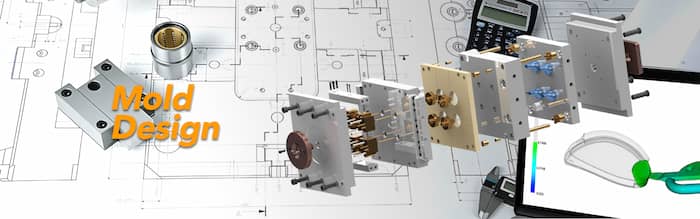
Injection mold design plays a critical role in modern plastic product manufacturing. A well-designed injection mold determines whether plastic parts can be produced efficiently, consistently, and with the required dimensional accuracy.
In many manufacturing projects, product quality issues are not caused by the injection molding machine itself but by poor mold design decisions made during the early development stage. Improper wall thickness, incorrect gate placement,t or inefficient cooling layouts can lead to serious production problems once mass production begins.
Common defects such as warpage, sink marks, weld lines, or dimensional instability are often the result of design issues rather than material or machine problems.
For engineers, product designers, and procurement managers, understanding the key principles of injection mold design is essential. A properly designed mold improves production stability, reduces manufacturing costs, and ensures consistent product quality over long production cycles.
This guide explains the most important factors engineers should consider when designing injection molds for plastic parts.
1. Start with Proper Wall Thickness Design
Wall thickness is one of the most fundamental considerations in plastic part design and injection mold design. Uniform wall thickness allows molten plastic to flow smoothly through the mold cavity and ensures consistent cooling during the molding process.
When wall thickness varies significantly across a plastic component, different areas of the part cool at different speeds. This uneven cooling creates internal stress within the plastic structure. As a result, the finished part may warp, shrink unevenly, or lose dimensional accuracy.
For this reason, experienced mold designers try to maintain consistent wall thickness throughout the product design whenever possible.
In situations where thickness variations cannot be avoided, gradual transitions between thick and thin sections are recommended. Sudden thickness changes can interrupt plastic flow and cause defects such as sink marks or internal voids.
Material selection also influences wall thickness design. Different plastic materials have different flow characteristics and cooling behavior. Engineers must evaluate the material’s melt flow properties before determining optimal thickness values.
By maintaining proper wall thickness distribution, engineers can improve product strength, reduce molding defects, and enhance overall production stability.
2. Apply Correct Draft Angles for Easy Mold Release
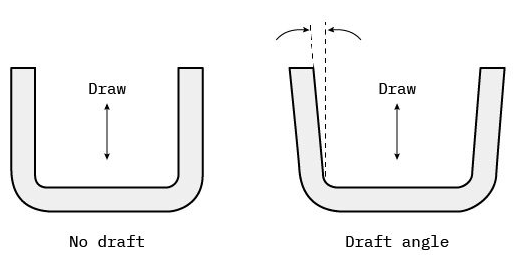
Draft angles are another critical element in injection mold design. A draft angle is the slight taper applied to the vertical walls of a plastic part so that the part can be easily removed from the mold cavity after cooling.
Without sufficient draft angles, molded parts may stick to the mold surface during the ejection stage. This can cause surface scratches, deformation, or even damage to the mold itself.
In most injection molding applications, draft angles between 1° and 3° are commonly recommended.
However, the optimal draft angle depends on several factors, including:
• Surface texture
• Plastic material properties
• Part depth
• Mold surface finish
Parts with textured or patterned surfaces generally require larger draft angles because the texture increases friction between the part and the mold.
Deep plastic components may also require larger draft angles to ensure smooth ejection.
Providing proper draft angles not only protects the mold from damage but also improves production efficiency by allowing molded parts to be released quickly and consistently during each molding cycle.
3. Optimize Gate Location for Balanced Material Flow
Gate design determines how molten plastic enters the mold cavity and fills the entire part geometry. The gate location directly influences flow patterns, internal stress distribution,n, and the visual appearance of the final plastic product.
Improper gate placement can lead to several common molding defects, such as:
• Weld lines
• Air traps
• Flow marks
• Uneven material distribution
These issues can weaken the structural strength of plastic parts or reduce product aesthetics.
During injection mold design, engineers carefully evaluate gate placement to ensure balanced filling of the mold cavity. In many projects, mold flow simulation software is used to analyze how molten plastic flows through the mold system.
Mold flow analysis helps engineers predict potential issues before the mold is manufactured. This reduces development risk and prevents costly design modifications later in the project.
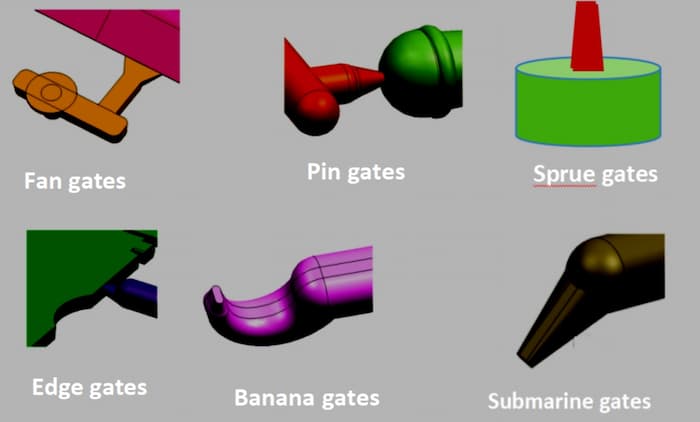
The selection of the gate type is also important. Common gate types include:
• Edge gate
• Pin gate
• Submarine gate
• Hot runner gate systems
Each gate type has advantages depending on part geometry and production requirements.
A well-designed gating system ensures stable filling, reduces internal stress, and improves overall product quality.
4. Design Efficient Cooling Channels
Cooling system design has a major impact on both production efficiency and product quality in injection molding.
In most injection molding cycles, cooling accounts for a large portion of the total production time. An efficient cooling design can significantly reduce cycle time and improve manufacturing productivity.
Cooling channels are typically designed inside the mold plates to circulate cooling water and remove heat from the molten plastic during the molding process.
If cooling channels are poorly positioned or unevenly distributed, certain areas of the mold may remain hotter than others. This uneven temperature distribution causes inconsistent shrinkage during cooling, which can result in part deformation or dimensional variation.
Engineers must carefully design cooling channels to ensure uniform heat removal across the mold cavity.
Advanced cooling technologies, such as conformal cooling, may be used in complex molds to improve thermal efficiency.
Proper cooling system design offers several advantages:
• Reduced cycle time
• Improved dimensional stability
• Lower production costs
• More consistent product quality
Cooling efficiency is therefore one of the most important considerations during injection mold design.
5. Ensure Proper Mold Structure and Component Design
Injection mold design also involves configuring the internal structure of the mold and selecting appropriate mold components.
Typical mold components include:
• Core and cavity inserts
• Ejector systems
• Guide pillars and bushings
• Runner systems
• Cooling channels
Each component must be precisely engineered to ensure accurate plastic part formation and smooth mold operation.
For example, the ejector system must apply a uniform force to release the plastic part from the mold without damaging the product. Poor ejector design can cause deformation or visible ejector marks on the finished part.
Alignment components, such as guide pins,s ensure that the two halves of the mold close precisely during each molding cycle. Misalignment can lead to flash or dimensional errors.
Engineers must also consider long-term durability when designing mold structures. Injection molds often operate for hundreds of thousands or even millions of cycles.
Using high-quality mold materials and robust structural design helps extend mold life and reduce maintenance requirements.
A well-designed mold structure improves tooling reliability and ensures stable mass production over long periods.
Conclusion
Injection mold design is a critical engineering stage that directly determines the success of plastic product manufacturing. Careful consideration of design factors such as wall thickness, draft angles, gate location, and cooling channel layout can significantly improve molding performance.
A properly designed injection mold ensures stable production, consistent product quality, and efficient manufacturing cycles.
For companies developing plastic components, investing time and expertise in injection mold design helps reduce manufacturing risks, control production costs, and achieve reliable large-scale production.
Understanding these design principles allows engineers and product developers to create molds that deliver both performance and long-term manufacturing efficiency.