
Injection Mold Cost Breakdown: What Determines Tooling Price
Introduction
Injection molding is one of the most widely used manufacturing methods for producing plastic parts in industries such as automotive, consumer electronics, medical devices, and industrial equipment.
However, companies that start developing plastic products are often surprised by the large variation in injection mold cost. Two molds designed for similar plastic parts may have completely different tooling prices.
This happens because an injection mold is not simply a metal block used to shape plastic. It is a precision-engineered system designed to operate under high pressure, high temperature, and repeated production cycles.
Several engineering factors influence injection mold cost, including:
• part size and geometry
• mold material selection
• number of cavities
• mold life requirement
• surface finishing processes
• runner system design
Understanding these factors helps engineers, product designers, and sourcing managers evaluate tooling quotations and make better manufacturing decisions.
1. Part Size and Mold Complexity
Part size is one of the most fundamental factors affecting injection mold cost.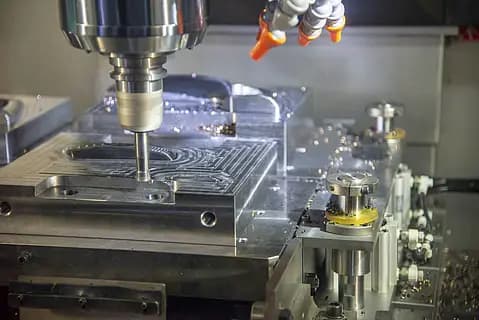
Larger plastic components require larger mold bases and thicker mold plates. Larger molds also require more mold steel and longer machining time. In addition, large molds may require injection molding machines with higher clamping force during production.
Part complexity also plays a major role in determining tooling price.
Simple plastic parts with straightforward geometries are easier to manufacture. However, complex parts often require additional mold mechanisms to release the part from the mold cavity.
Common additional mold components include:
• sliders for side openings
• lifters for internal undercuts
• collapsible cores for complex geometries
• unscrewing mechanisms for threaded parts
Each additional component increases the complexity of mold design, machining,g and assembly.
As mold complexity increases, the injection mold cost also increases.
2. Mold Material Selection
The choice of mold steel has a direct impact on injection mold cost and mold durability.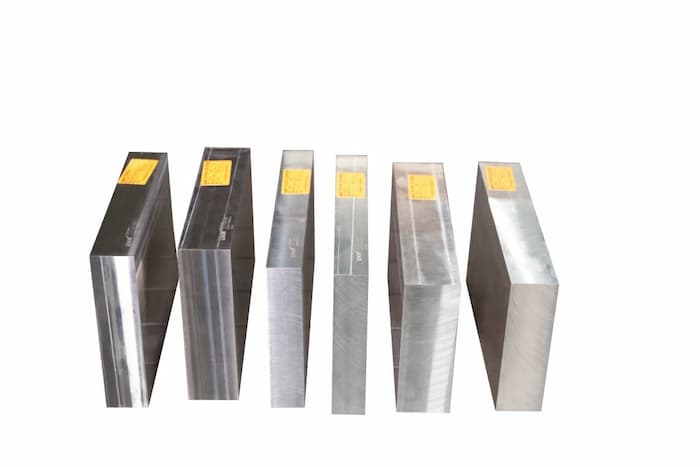
Injection molds must withstand high pressure and repeated injection cycles. Therefore, mold materials must have sufficient hardness, wear resistance, and thermal stability.
Common mold steels include:
• P20 steel – widely used for standard production molds
• H13 steel – suitable for molds requiring higher heat resistance
• S136 stainless steel – used for corrosion resistance and high-gloss plastic products
Lower-cost mold steels are suitable for low-volume production or prototype molds. For high-volume manufacturing, stronger steel materials are often required to ensure mold stability.
Although higher-grade steels increase tooling cost, they also improve mold life and reduce maintenance during long production runs.
3. Number of Cavities
The number of cavities in a mold determines how many parts are produced during each injection cycle.
A single-cavity mold produces one plastic part per cycle. These molds are usually simpler to design and manufacture, which keeps the tooling cost relatively low.
However, many manufacturing projects require higher production efficiency. In these cases, manufacturers may choose multi-cavity molds.
Examples include:
• 2-cavity molds
• 4-cavity molds
• 8-cavity molds
Multi-cavity molds allow several plastic parts to be produced simultaneously, which significantly increases production efficiency.
However, multi-cavity molds require more advanced engineering design. The runner system must distribute molten plastic evenly across all cavities. Engineers must carefully balance flow length, pressure distribution, and cooling conditions.
Because of these additional design requirements, multi-cavity molds usually have a higher tooling cost.
4. Mold Life Expectation
Expected mold life is another important factor influencing injection mold cost.
Different manufacturing projects require different production volumes. Some molds are designed for small production runs, while others must support large-scale manufacturing.
Typical mold life requirements include:
• 50,000 cycles for prototype molds
• 300,000 cycles for medium-volume production
• 1,000,000 cycles or more for high-volume manufacturing
To achieve longer mold life, manufacturers may use:
• stronger mold steels
• advanced heat treatment processes
• surface hardening technologies
These improvements increase mold durability but also increase the initial tooling cost.
However, molds designed for longer service life provide better production stability and reduce maintenance costs during long manufacturing runs.
5. Surface Finish Requirements
Surface appearance requirements can also influence injection mold cost.
Many plastic products require high-quality surface finishes. For example, consumer electronics housings, automotive interior parts, and household appliances often require visually attractive surfaces.
To achieve these finishes, additional mold processing steps may be required, including:
• mirror polishing
• EDM surface texturing
• chemical etching
Mirror polishing requires extremely smooth mold cavity surfaces, which often involves skilled manual polishing work.
Textured surfaces require specialized processes that create patterns on the mold cavity. These patterns are then transferred to the plastic part during injection molding.
Because these finishing processes require additional labor and machining time, they increase overall mold manufacturing cost.
6. Runner System Design
Runner system design is another factor that affects injection mold cost.
The runner system guides molten plastic from the injection molding machine nozzle into the mold cavities.
Two common types of runner systems are used in injection molds.
Cold Runner System
Cold runner molds use unheated channels to guide plastic into the cavities. These molds are simpler and less expensive to manufacture.
However, cold runner systems generate additional plastic waste because the runner material must be removed from each molded part.
Hot Runner System
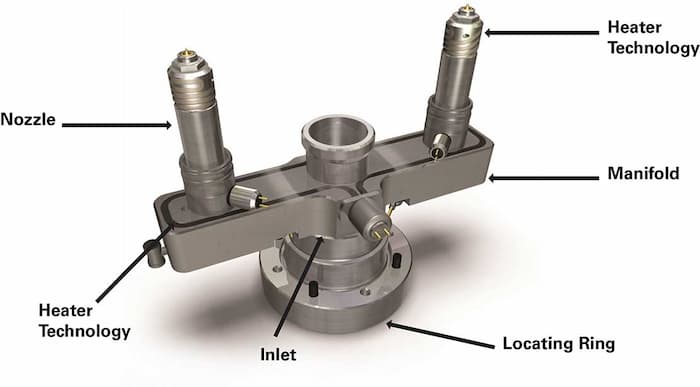
Hot runner molds use heated channels to keep plastic molten during the injection process.
Advantages of hot runner systems include:
• reduced material waste
• improved production efficiency
• better process control
However, hot runner molds require additional components such as heaters, temperature controllers, and specialized nozzles. These components increase both mold complexity and tooling cost.
Conclusion
Injection mold cost is determined by multiple engineering and production factors. Part size, mold complexity, mold material selection, cavity number, mold life requirements, surface finishing processes, and runner system design all contribute to the final tooling price.
Understanding these factors helps manufacturers and product developers better evaluate mold quotations and plan manufacturing strategies.
Although injection mold tooling requires significant upfront investment, a well-designed mold ensures stable production, consistent part quality, and long-term manufacturing efficiency.
Working with experienced mold engineers and manufacturers can help optimize mold design while balancing tooling cost and production performance.