

Injection molding is more than shaping plastic—it’s a precise combination of physics, mathematics, and engineering. While visual design and material selection are important, the hidden mathematics of flow, pressure, and temperature determine whether a part meets stringent quality standards. By understanding these principles, engineers can optimize molds, reduce defects, and increase efficiency across industries such as automotive, medical, consumer electronics, and household appliances.
1️⃣ Flow Mathematics: Predicting How Plastic Fills the Mold
Plastic isn’t just a liquid; it’s a non-Newtonian fluid. The math of shear thinning tells us that the faster we push the plastic, the less viscous it becomes. At JINYI, we calculate the perfect injection speed to ensure the resin flows into thin-walled sections without degrading the material.
Key Point: Proper flow ensures uniform filling, avoiding short shots or sink marks.
Real-World Example – Automotive: For large bumper panels, flow simulation designs the runner system to fill evenly, minimizing warpage.
Real-World Example – Consumer Electronics: For ultra-thin housings (0.5mm wall thickness), precise flow calculations ensure complete filling without weak spots or incomplete sections.
Extended Insight: Flow mathematics helps determine gate locations, runner sizes, and injection speeds to achieve consistent quality, even in complex or multi-cavity molds.
2️⃣ Pressure Mathematics: Controlling Fill, Density, and Shrinkage
Pressure drives molten plastic into every cavity. Uneven pressure can lead to warping, shrinkage, or stress. At JINYI, we incorporate PVT (Pressure-Volume-Temperature) analysis to predict how much a part will shrink as it cools. By calculating the exact holding pressure needed to “pack” the mold, we ensure that a 100mm part remains precisely 100mm.
Key Point: Correct pressure distribution ensures dimensional stability and reduces post-molding deformation.
Real-World Example – Medical Devices: Adjusting holding pressure and gate design reduces defect rates by over 20%, achieving high-precision, biocompatible parts.
Real-World Example – Two-Shot Molding (2K): When combining two materials with different thermal expansion coefficients, pressure mathematics ensures balanced packing and avoids warpage at the interface.
3️⃣ Temperature Mathematics: Heat Transfer and Cooling Optimization
Temperature affects flow and solidification. Using heat transfer principles, engineers design cooling channels that balance mold temperature and reduce cycle times.
Key Point: Uniform temperature prevents warping, improves surface quality, and maintains dimensional accuracy.
Real-World Example – Automotive Trim: Optimized cooling circuits keep tolerances tight (±0.03 mm) across large, complex molds.
Real-World Example – Consumer Electronics: For small, thin housings, proper thermal control prevents deformation and ensures consistent assembly dimensions.
4️⃣ Simulation and Data: Turning Mathematics Into Action
Simulation allows engineers to predict flow, pressure, and temperature before cutting steel. This reduces trial-and-error and material waste. At JINYI, we integrate simulation results into every project:
Key Point: Data visualization transforms mathematical principles into actionable engineering decisions.
Extended Insight: Hotspots, pressure drops, and flow imbalances identified in simulation guide gate location, cooling channel design, and injection parameters.
Real-World Application – Smart Home Devices: Simulations predict potential defects, allowing preemptive corrections and consistent high-quality production.
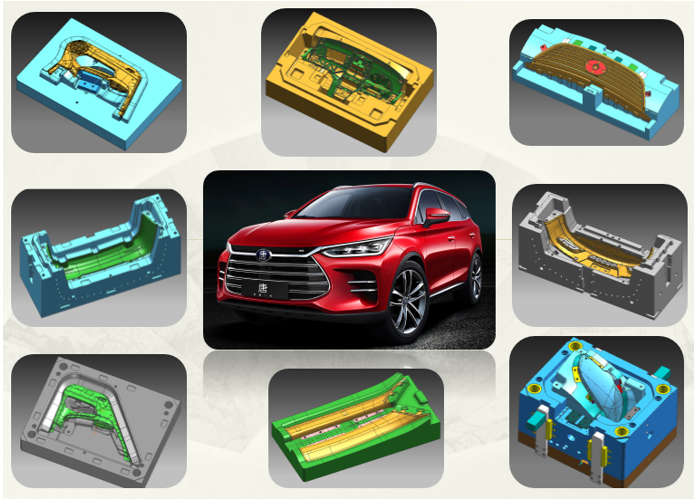
5️⃣ DFM (Design for Manufacturing): From Math to Design
Mathematics isn’t just for the shop floor—it informs the DFM stage. By analyzing flow, pressure, temperature, and PVT data early, engineers identify potential “hot spots” or areas prone to shrinkage before mold fabrication.
Key Point: Early-stage mathematical analysis saves weeks of trial-and-error and thousands in mold modifications.
Real-World Example – Automotive Dashboard: Preemptive flow and pressure analysis reduces adjustments during trial molding, cutting lead time by 20%.
Extended Insight – High-Precision Applications: For aerospace or defense-grade parts, DFM integration ensures critical tolerances are achieved from the first mold run.
6️⃣ Optimization Through Small Adjustments: Big Improvements
Even small adjustments—runner angles, gate diameters, cooling path changes—can significantly improve flow balance, cycle time, and part quality.
Example: Combining flow, pressure, and temperature analysis, JINYI optimized a multi-cavity mold for medical housings. Minor modifications based on simulation results improved dimensional accuracy and reduced cycle time.
Example – Two-Shot Molding: Balancing pressure between two materials prevents warpage or stress at interfaces, ensuring high-quality multi-material parts.
7️⃣ Conclusion: Why Mathematics Matters in Injection Molding
Flow, pressure, and temperature mathematics are not abstract—they are the foundation of successful injection molding. By combining simulation, data analysis, and DFM principles, JINYI Mould ensures efficient, precise, and high-quality production for automotive, medical, consumer electronics, household appliances, and high-reliability parts.
At JINYI Mould, we combine advanced simulation, precision engineering, and years of industry experience to turn complex ideas into high-quality injection molded parts. Whether you are developing automotive components, medical devices, consumer electronics, or specialized industrial products, our team is ready to optimize your design, reduce defects, and accelerate your time-to-market.
Partner with us to transform your concept into precise, reliable, and manufacturable parts. Explore our capabilities and see how we can help your project succeed: Our Product