

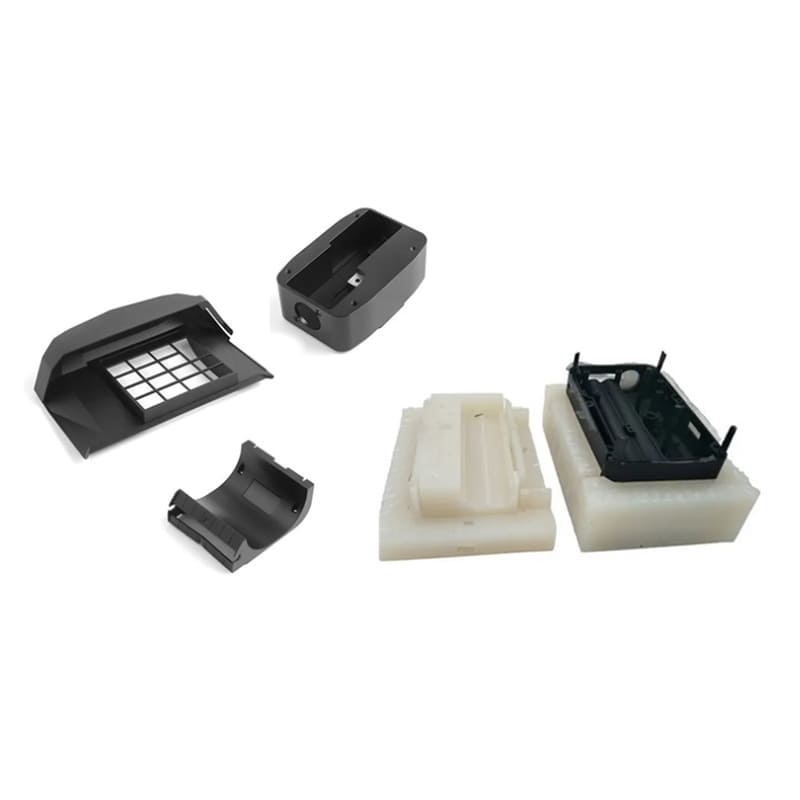
Detailed Process Overview for Silicone Overmolding in Automotive and Medical Applications
In modern manufacturing, especially within automotive and medical industries, Automotive Silicone Parts and biocompatible silicone parts play a crucial role in delivering performance, safety, and flexibility. The production of film-coated components using silicone materials involves a sophisticated series of processes, ensuring the final products meet demanding structural, environmental, and regulatory requirements.
The integration process begins with rapid prototyping with silicone molds, which enables designers and engineers to validate part geometries quickly and cost-effectively. Through this method, a master model is typically created using 3D printing, then duplicated through high-fidelity silicone molds. This technique is essential not only for automotive interior and exterior parts but also for the production of medical-grade silicone casting components used in surgical equipment and diagnostic devices.
Following successful prototyping, production transitions to overmolding using liquid silicone rubber (LSR). This method involves injecting LSR around or onto a rigid substrate, creating a unified structure with enhanced sealing, impact resistance, and biocompatibility. For Automotive Silicone Parts, overmolding improves resistance to extreme temperatures, chemicals, and mechanical stress, vital for applications like gaskets, seals, connectors, and dashboard controls.
In the medical field, silicone overmolding for medical devices is crucial to achieving patient-safe, hygienic, and durable products. Overmolding with LSR ensures seamless surfaces, reducing bacterial adhesion and enhancing cleaning efficiency, which is critical for devices such as breathing masks, catheters, and wearable health monitors. Additionally, biocompatible silicone parts are essential for ensuring that products meet ISO 10993 and USP Class VI medical safety standards.
Throughout the entire development process, rapid prototyping with silicone molds enables faster iteration cycles, reducing time-to-market for both automotive and medical industries. Engineers can perform functional testing, ergonomic evaluations, and environmental simulations early in the development cycle, minimizing costly design changes later on.
When scaling up for production, overmolding using liquid silicone rubber ensures repeatability, high precision, and material consistency. Silicone's inherent flexibility and resistance properties make it an ideal material for both critical automotive applications and patient-contact medical devices. Whether manufacturing Automotive Silicone Parts like valve covers, sensor housings, or intricate biocompatible silicone parts for implants and prosthetics, the overmolding process delivers unmatched versatility.
Moreover, medical-grade silicone casting enables the production of ultra-pure, chemically resistant parts for specialized medical environments. Using platinum-cured silicones, manufacturers achieve parts that exhibit low extractables, superior tear strength, and excellent optical clarity—properties vital for next-generation healthcare solutions.
Silicone overmolding for medical devices often involves multi-material combinations, such as bonding silicone to metals, thermoplastics, or glass. This multi-material integration enhances device functionality while maintaining lightweight and compact designs. Similarly, in the automotive sector, combining silicone with rigid plastics ensures greater design freedom and enhanced vehicle interior performance.
Through each phase, from initial rapid prototyping with silicone molds to final product validation, the expertise of a high-precision silicone manufacturer ensures that tolerance requirements, material certifications, and regulatory compliances are fully achieved. Special attention is given to maintaining consistent material properties across batches, critical for both Automotive Silicone Parts and medical-grade silicone casting solutions.
Ultimately, the application of overmolding using liquid silicone rubber has redefined the way flexible, durable, and safe components are manufactured. The ability to produce biocompatible silicone parts with customized hardness, color, and surface finishes positions silicone technology at the forefront of innovation for automotive, healthcare, and consumer industries.
In conclusion, the seamless integration of Automotive Silicone Parts, medical-grade silicone casting, and silicone overmolding for medical devices underscores the transformative impact of advanced silicone processing. By leveraging cutting-edge techniques such as rapid prototyping with silicone molds and overmolding using liquid silicone rubber, manufacturers continue to push the boundaries of design flexibility, performance, and user safety.