

How to Achieve ±0.03 mm Precision for Automotive Interior Plastic Parts with Sustainable Materials
The automotive industry increasingly prioritizes sustainability, lightweight design, and high-quality interior components. Automotive interior plastic parts such as dashboards, door panels, and center console trims are critical to vehicle aesthetics and functionality. As an experienced injection mold engineer, I want to provide a data-driven, problem-solving perspective on materials, tooling, and process optimization that ensures high-quality production.
1. Sustainable Materials in Automotive Interiors
Automakers are moving toward bio-based polymers and recycled plastics to meet environmental regulations and consumer expectations:
Recycled content: Using 15–40% recycled polypropylene (rPP) or bio-polyamide maintains mechanical strength while improving sustainability metrics.
Processing parameters: Injection pressures range from 80–120 MPa, with melt temperatures of 220–280 °C for rPP and 260–280 °C for bio-polyamide, ensuring minimal material degradation.
Dimensional stability: Optimized formulations achieve ±0.05 mm tolerance for critical features.
Cycle time: Sustainable materials reduce cooling time by 5–8%, improving throughput without compromising surface quality.
These practices ensure compliance with regulations like the EU End-of-Life Vehicle (ELV) Directive and meet high-quality standards for automotive interior plastic parts.
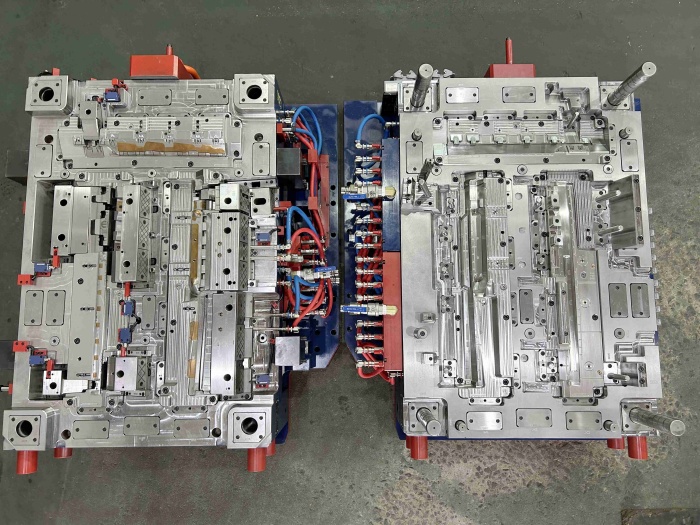
2. High-Precision Tooling for Consistent Quality
Precision tooling ensures fit, finish, and tactile experience for automotive interiors:
Dimensional accuracy: Multi-cavity molds maintain tolerances within ±0.03 mm for parts up to 500 mm.
Injection and mold temperatures: 80–100 °C for polypropylene and 60–90 °C for PC/ABS blends minimize warpage.
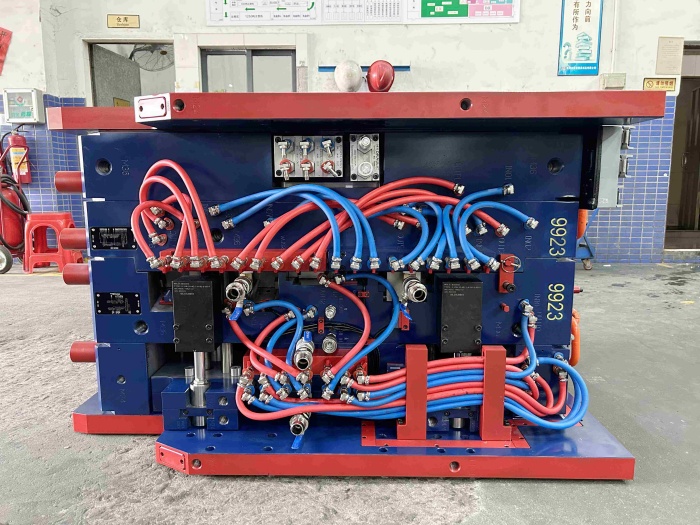
Cooling optimization: Conformal cooling channels reduce cycle times by up to 15%, maintaining flatness and surface gloss.
Mold lifespan: High-precision steel molds (P20 or S136, HRC 48–52) support over 500,000 cycles with minimal maintenance.
By integrating Moldflow simulations and DFM analysis for plastic parts, defects such as sink marks or warpage are minimized. As a leading injection mold manufacturer in China, JINYI Mould ensures these high-precision tooling solutions meet both OEM requirements and global production standards.
3. Addressing Shrinkage and Warpage in Automotive Interior Parts
One of the most common challenges in automotive interior plastic parts is shrinkage and warpage, which can compromise assembly fit and surface quality. Key strategies to address these issues include:
Optimizing wall thickness: Ensuring uniform wall thickness (typically 1.0–1.5 mm for dashboards and door panels) reduces differential cooling that causes warpage.
Gate and runner design: Strategic placement of gates and optimized runner sizes balances flow, minimizing internal stress and uneven shrinkage.
Mold temperature control: Maintaining mold temperature within ±2 °C of target values ensures consistent cooling and reduces thermal gradients that lead to warpage.
Material selection and drying: Proper drying of hygroscopic materials like PC/ABS blends prevents bubble formation and dimensional instability.
Simulation-driven design: Using Moldflow or similar software, engineers can predict warpage up to 0.1% and adjust mold features before production, avoiding costly trial-and-error.
Ejection system optimization: Controlled ejection with balanced pins or air-assist reduces post-mold deformation, critical for thin-wall interior parts.
By implementing these practices, manufacturers can keep shrinkage below 0.4% and warpage within ±0.05 mm, ensuring precise assembly and consistent quality.
4. Process Control and Design Optimization
Achieving consistent quality requires a coordinated approach:
Mold flow simulation: Evaluates filling balance, cooling efficiency, and stress distribution before mold fabrication.
Cooling optimization: Custom cooling circuits, including conformal channels, reduce cooling time by 10–15% while minimizing part deformation.
Quality monitoring: SPC combined with CMM ensures critical dimensions stay within ±0.02 mm for batch production.
This integrated approach enables high-volume production of automotive interior plastic parts with precise tolerances for assembly.
5. Balancing Sustainability with Production Efficiency
Thin-wall designs: Many interior parts feature wall thicknesses of 1.0–1.5 mm. Optimized gate design, flow balance, and mold cooling are essential.
Green manufacturing: Using recycled materials and energy-efficient cooling reduces factory energy consumption by 5–10%.
Combining sustainable materials with custom tooling services ensures both environmental compliance and high-quality, reliable production.
FAQ: Common Questions About Automotive Interior Plastic Parts
Q1: How can we maintain ±0.03 mm tolerance in high-volume production?
A1: Precision starts with mold design. Multi-cavity molds, conformal cooling, and controlled ejection, combined with Moldflow simulations and DFM analysis, ensure dimensional consistency throughout large batches.
Q2: Are recycled plastics suitable for dashboards and door panels?
A2: Yes. With proper material selection and process control, recycled polypropylene or bio-polyamides can achieve the same mechanical properties as virgin materials while reducing environmental impact.
Q3: How do you prevent warpage in thin-wall interior parts?
A3: Uniform wall thickness, strategic gate placement, mold temperature control, and simulation-driven design reduce stress and shrinkage, keeping warpage within ±0.05 mm.
Q4: Can JINYI Mould support custom DFM consultations?
A4: Absolutely. As a leading injection mold manufacturer in China, we provide DFM evaluations to optimize design, tooling, and process parameters for high-quality automotive interior plastic parts.
Conclusion: Expert Support from Design to Production
Developing high-quality automotive interior plastic parts requires a holistic approach: material selection, precision tooling, and rigorous process control. At JINYI Mould, as a leading injection mold manufacturer in China, we specialize in high-precision tooling, Moldflow simulation, and DFM analysis, providing tailored recommendations to improve manufacturability and efficiency.
📌 If you are planning your next automotive interior plastic parts project, contact us through www.jy-mould.com for a professional DFM consultation. We help global OEMs optimize designs, achieve ±0.03 mm precision, and ensure production stability while integrating sustainable materials.