
Injection mold cost is influenced by many engineering decisions made long before production begins. By selecting the right mold steel, evaluating runner system ROI, and optimizing design through DFM analysis, manufacturers can significantly reduce tooling investment.
This article explains practical strategies used by a professional injection mold manufacturer in China to help companies achieve reliable and cost-effective tooling solutions.
How to Reduce Injection Mold Cost by 15–20%: 3 Professional Strategies from a Chinese Manufacturer
In modern manufacturing, controlling injection mold cost is a critical concern for procurement managers, engineers, and product development teams. Many companies assume mold pricing is determined mainly by part size or geometry. However, in reality, several key engineering decisions made early in the project can significantly influence the final plastic injection mold price.
As an experienced injection mold manufacturer in China, JINYI MOULD has helped many international customers optimize tooling budgets while maintaining high production reliability. Through proper material selection, efficient mold structure planning, and professional injection mold design, companies can often reduce tooling investment by 15–20% or more.
Below are three proven strategies widely used in the mold manufacturing industry.
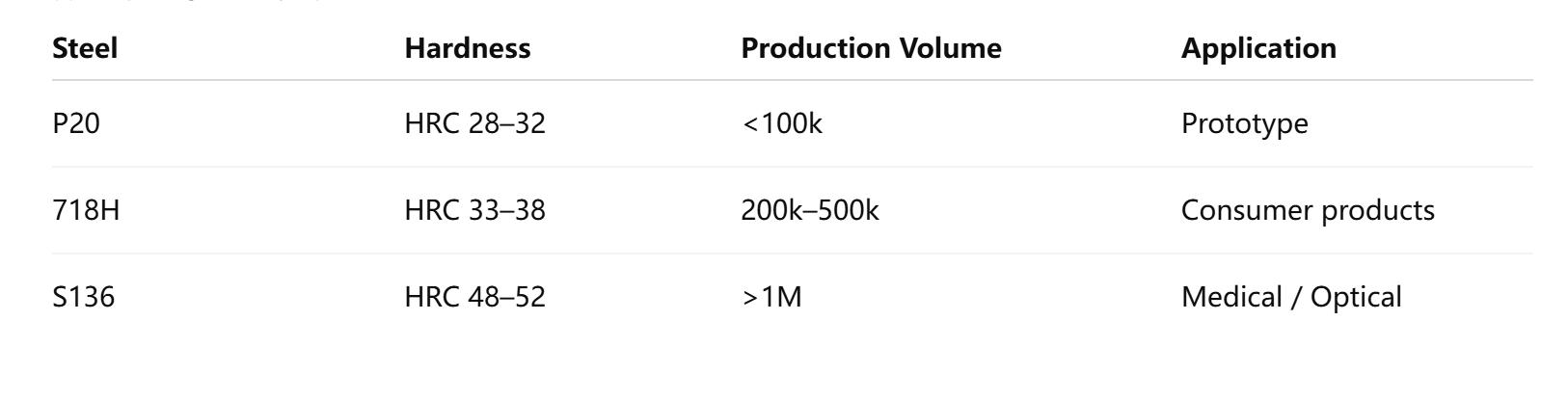
1. Choosing the Right Mold Steel: P20 vs 718H vs S136
One of the most important factors affecting injection mold cost is the choice of mold steel. Selecting a material that matches the expected production volume is essential for achieving cost-effective tooling solutions.
P20 Steel
P20 is one of the most commonly used mold steels in plastic injection molding. It is typically pre-hardened to HRC 28–32, making it easy to machine and relatively economical.
P20 is commonly used for:
Prototype molds
Product validation stages
Low-volume production (under 100,000 shots)
For early-stage projects or market testing, P20 provides a good balance between durability and tooling cost.
718H Steel
718H is an upgraded version of P20 and is widely used in medium to high production molds. It is usually pre-hardened to HRC 33–38 for better wear resistance.
Typical applications include:
Consumer electronics housings
Industrial plastic components
Automotive interior parts
For products expecting 200,000–500,000 cycles, 718H offers excellent performance while keeping the plastic injection mold price under control.
S136 Steel
S136 is a premium stainless mold steel known for its corrosion resistance and high polishing capability. It is usually heat-treated to HRC 48–52 for long-term durability.
S136 is often selected for:
Medical plastic parts
Optical or transparent components
High-volume molds exceeding one million cycles
Although S136 increases the initial tooling investment, its long service life can reduce maintenance costs during mass production.
2. Cold Runner vs Hot Runner: Understanding the ROI
Another important factor influencing injection mold cost is the runner system.
Many buyers focus only on the tooling quotation, but the runner system has a significant impact on long-term production cost.
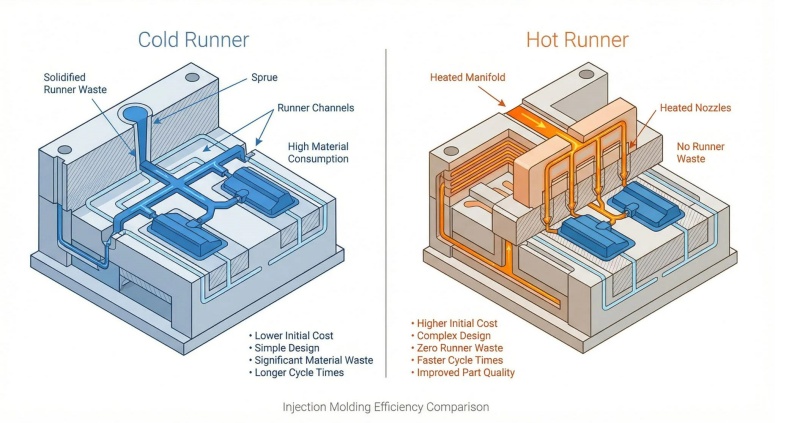
Cold Runner System
Cold runner molds are mechanically simpler and cheaper to manufacture. They are suitable when:
Production volume is relatively small
Plastic materials are inexpensive
Runner scrap can be recycled
However, cold runners generate material waste in every molding cycle.
Hot Runner System
Hot runner molds keep plastic molten inside heated channels, eliminating runner waste.
Advantages include:
Reduced raw material consumption
Shorter cycle times
Improved product consistency
Better automation compatibility
Although the initial tooling investment is higher, high-volume projects can often recover the additional cost within 6–12 months.
A simple way to understand the difference:
Cold runners save you money today (tooling cost), but hot runners save you money every day (production cost).
A professional injection mold manufacturer in China will typically evaluate runner system ROI during the quotation stage to help customers choose the most economical solution.
3. DFM Analysis: The Hidden Key to Cost Reduction
Many unnecessary tooling costs originate from product features that complicate injection mold design.
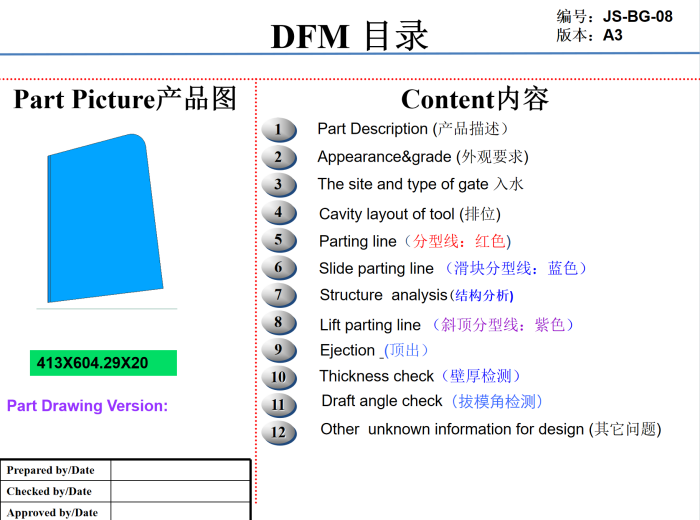
This is where Design for Manufacturability (DFM) becomes essential.
Features such as undercuts may require additional mold mechanisms including:
Lifters
Sliders
Side core mechanisms
These structures increase machining time, mold complexity, and long-term maintenance costs.
However, small design changes can sometimes eliminate these mechanisms entirely.
For instance, increasing a draft angle from 0.5° to 1.5° may eliminate the need for a slider, potentially saving $1,500–$3,000 in tooling cost per action.
Early DFM analysis helps manufacturers:
Simplify mold structure
Reduce tooling cost
Shorten mold manufacturing lead time
Improve production stability
For companies seeking cost-effective tooling solutions, professional DFM review is one of the most valuable steps before mold manufacturing begins.
Typical Injection Mold Cost Breakdown
Understanding where the tooling budget goes can also help control injection mold cost.
| Cost Component | Percentage |
|---|---|
| Mold steel material | 20–30% |
| CNC machining | 25–35% |
| EDM machining | 10–15% |
| Mold assembly | 15–20% |
| Testing and sampling | 5–10% |
This breakdown shows why simplifying mold structure during injection mold design can significantly reduce tooling investment.
Injection Mold Cost Optimization Checklist
Before starting a tooling project, engineers usually review the following factors:
✔ Select mold steel according to expected production volume
✔ Compare cold runner vs hot runner ROI
✔ Minimize unnecessary undercuts in the product design
✔ Increase draft angles for easier part ejection
✔ Consider multi-cavity molds for high-volume production
✔ Perform professional DFM analysis before mold manufacturing
Following these steps can significantly reduce the overall plastic injection mold price while improving manufacturing efficiency.
FAQ: Injection Mold Cost and Tooling
How much does an injection mold cost?
The injection mold cost varies depending on complexity and size.
Typical ranges are:
| Mold Type | Estimated Cost |
|---|---|
| Prototype mold | $1,000 – $5,000 |
| Low-volume production mold | $5,000 – $15,000 |
| High-volume precision mold | $15,000 – $80,000+ |
Working with a professional injection mold manufacturer in China can often reduce tooling costs while maintaining high quality.
Why do many companies choose mold manufacturers in China?
China has one of the most mature mold manufacturing ecosystems in the world. Advantages include:
Skilled mold engineers
Advanced CNC and EDM equipment
Efficient supply chains
Competitive manufacturing costs
These factors allow Chinese companies to provide reliable cost-effective tooling solutions for global customers.
Can DFM really reduce mold cost?
Yes. Many mold projects can reduce injection mold cost by 10–20% through DFM improvements.
Optimizing draft angles, wall thickness, and undercut structures can eliminate expensive mold mechanisms and simplify production.
Final Thoughts
Reducing injection mold cost is not about choosing the cheapest supplier. Instead, it requires the right engineering decisions early in the project.
Proper mold steel selection, runner system ROI evaluation, and professional DFM analysis can significantly improve the economics of a tooling project.
As a professional injection mold manufacturer in China, JINYI MOULD helps global customers develop reliable and cost-effective tooling solutions tailored to their production needs.
If you are developing a new plastic product, welcome to send your 3D drawings to selina@jy-mould.com to receive a free DFM suggestion from our engineering team.